

By Jim Stockstill
Part 2 – The Truth of Easter: Passover and Resurrection of Jesus Christ
April 11, 2022
A quick review of Part 1: Pagan Easter, Jewish Pesach, and Jesus Christ
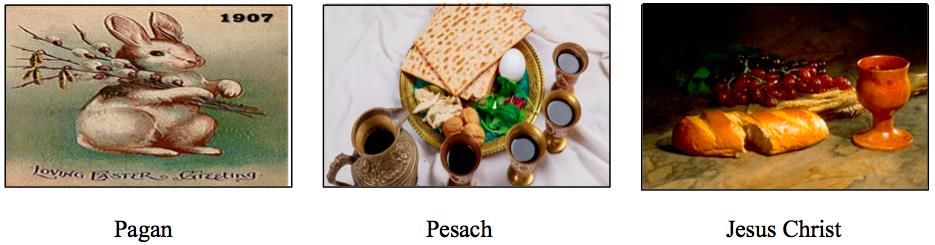
Ishtar, a goddess of both fertility and war, is the Akkadian name of the Sumerian goddess Inanna and the Semitic goddess Astarte, the three names referring to the same deity in diverse cultural contexts. She inspired great devotion in the ancient Babylonian empire, as evidenced by the many grand temples, altars, inscriptions, and art objects devoted to her.
Etymology
The name Ishtar is Semitic in origin and was identified in ancient times with the Canaanite goddess Ashtoreth or Astarte (Biblical Hebrew עשתרת). The root word may be the same as that of Assur, meaning the “leading one” or “chief.” The older Sumerian name, Inanna, means “Great Lady of An”—An (or Anu) being the god of the sky or heaven.
In reading history, it is not hard to find information about the customs of Easter. The word Easter is derived from the ancient name Ishtar, a pagan goddess, and an abomination. It turns out the modern-day version of Easter is just a remake of some very ancient pagan traditions and practices. If a faithful follower of Christ is told the truth regarding the source of “Easter,” he/she would most certainly detest the origins of pagan worship.
Ashtaroth. We see that they made an appearance in Exodus 34:13, which means the Israelites engaged with pagan religions back during the time of Moses. We can see how their time spent in Egypt might have influenced them. When they were constantly bombarded by images of Egyptian polytheism, they might have let these elements seep into their religion.
By the time of Gideon (Judges 6), we see that his father had a statue of Baal and an Asherah pole. This must mean that other Israelites also had such objects and regularly paid tribute to them.
The evil king of Israel, Ahab, also set up an Asherah pole (1 Kings 16:33). The list goes on, with about 40 mentions in the Bible.
Victory for the Lamb
Revelation1:14 “They will wage war against the Lamb (Christ), and the Lamb will triumph and conquer them because He is Lord of lords and King of kings, and those who are with Him and on His side are the called and chosen (elect) and faithful.”
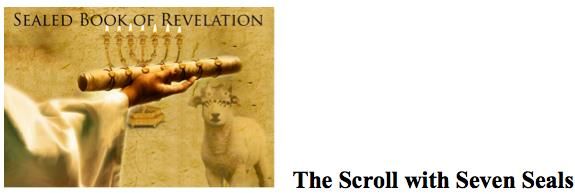
Revelation 5:1-7 “I saw in the right hand of Him who was seated on the throne a scroll written on the inside and on the back, closed and sealed with seven seals. 2 And I saw a strong angel announcing with a loud voice, “Who is worthy [having the authority and virtue] to open the scroll and to break its seals?” 3 And no one in heaven or on earth or under the earth [in Hades, the realm of the dead] were able to open the scroll or look into it. 4 And I began to weep greatly because no one was found worthy to open the scroll or look into it. 5 Then one of the [twenty-four] elders said to me, “Stop weeping! Look closely, the Lion of the tribe of Judah, the Root of David, has overcome and conquered! He can open the scroll and [break] its seven seals.” 6 And there ]between the throne (with the four living creatures) and among the elders, I saw a Lamb (Christ) standing, [bearing scars and wounds] as though it had been slain, with seven horns (complete power) and with seven eyes (complete knowledge), which are the seven Spirits of God who have been sent [on duty] into all the earth. 7 And He took the scroll from the right hand of Him who sat on the throne.”
- When the seals are broken, the consummation of history, focused on the judgments, is unveiled.
Pesach – Passover (Festival of Freedom)
Pesach: Pronounced: PAY-sakh, also PEH-sakh. Origin: Hebrew, the holiday of Passover.
Seder: Pronounced: SAY-der, Origin: Hebrew, literally “order;” usually used to describe the ceremonial meal and telling of the Passover story on the first two nights of Passover. (In Israel, Jews have a Seder only on the first night of Passover.)
Passover, or Pesach in Hebrew, is one of the three major pilgrimage festivals of ancient Israel and commemorates the Exodus from Egypt. Its name comes from the miracle in which God “passed over” the houses of the Israelites during the tenth plague. Centered on the family or communal celebration of the Seder (ritual meal), Passover is one of the most beloved of all Jewish holidays.
Passover History
The origins of Passover lie in pre-Israelite spring celebrations of the first grain harvest and the births of the first lambs of the season. In the Jewish context, it celebrates God’s great redemptive act at the time of the Exodus, leading the Israelites out of slavery in Egypt to freedom. Together with Shavuot (the Festival of Weeks) and Sukkot (The Festival of Booths), Passover is one of the three ancient Israelite pilgrimage festivals, during which adult males journeyed to the Temple in Jerusalem to offer sacrifices and bask in the divine presence. Since the destruction of the Second Temple in 70 CE, the focus of Passover shifted to the ritual meal, called the Seder, which normally takes place at home.
Passover At Home
In anticipation of Passover, it is traditional to engage in a thorough spring cleaning. During the holiday, the food reflects the major theme of Passover and is intended to help Jews relive God’s great redemptive act, albeit in a vicarious manner. Because the Israelites had no time to let their bread rise as they hurriedly left Egypt, Jewish law forbids eating (or even possessing) any food that contains leavened grains. Therefore, a major part of the preparations for Passover consists of removing all traces of leavened foods from the home and replacing them with unleavened foods. This necessitates both a massive cleanup and the replacement of one’s ordinary dishes with special Passover ones. It also requires a shopping expedition to stock the kitchen with special kosher-for-Passover foods.
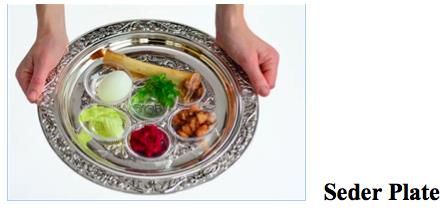
The central ritual of Passover is the Seder, a carefully choreographed ritual meal that typically takes place in the home. Several symbolic foods are laid out on the table, of which the most important is the matzah, the unleavened “bread of affliction.” The Seder follows a script laid out in the Haggadah, a book that tells the story of the redemption from Egypt. Although the Haggadah is a traditional text, many people add to it and revise it in accord with their theology and understanding of God’s redemptive actions in the world.
Exodus 12:33-40 “The Egyptians were urgent with the people to depart, that they might send them out of the land in haste; for they said, we are all dead men. 34 The people took their dough before it was leavened, their kneading bowls being bound up in their clothes on their shoulders. 35 The Israelites did according to the word of Moses, and they [urgently] asked of the Egyptians jewels of silver and gold and clothing. 36 The Lord gave the people favor in the sight of the Egyptians so that they gave them what they asked. And they stripped the Egyptians [of those things]. 37 The Israelites journeyed from Rameses to Succoth, about 600,000 men on foot, besides women and children. 38 And a mixed multitude went also with them, and numerous livestock, both flocks, and herds. 39 They baked unleavened cakes of the dough which they brought from Egypt; it was not leavened because they were driven from Egypt and could not delay, nor had they prepared for themselves any food. 40 Now the time the Israelites dwelt in Egypt was 430 years.”
Matzah
This represents the bread the Jews ate during their last night of bondage in Egypt. In their haste to flee, they did not have time to wait for their dough to rise before baking and eating the fat, hard bread called matzah. Eating matzah, “the bread of affliction,” reminds Jews of their past enslavement, the urgency of their liberation, and the importance of being humble in light of their redemption from suffering.
There are three matzot so that when one is broken (as a slave would), there are two whole matzot over which to recite the Hamotzi blessing (as required on Shabbat and holidays). The matzot are symbolic of the three groups of Jews: Priests, Levites, and Israelites. They also commemorate the three measures of fine flour that Abraham told Sarah to bake into matzah when they were visited by the three angels (Genesis 18:6).
Zeroa (Shank bone)
A piece of roasted meat represents the lamb that was the special paschal sacrifice on the eve of the exodus from Egypt, and annually on the afternoon before Passover in the Holy Temple.
Some use a forearm of a lamb. Called the zeroa, it alludes to the verse which states, “I will redeem you with an outstretched arm (zeroa).”
The “forearm” is symbolic of both the outstretched arm of God delivering the Jews from Egypt, as well as of the sacrificial lamb’s blood smeared on Jewish households to identify their inhabitants so that the Angel of Death would pass them by. In most households, the zeroa comes in the form of a lamb shank or chicken bone.
Beitzah (Egg)
A hard-boiled egg represents the pre-holiday offering (chagigah) that was brought in the days of the Holy Temple. The meat of this animal constituted the main part of the Passover meal. The Aramaic word for “egg” is bei’ah, which is similar to the Aramaic word for “desire,” expressing that this was the night when Jehovah desired to redeem the Israelites.
Maror and Chazeret (Bitter Herbs)
Bitter herbs (maror) remind Jews of the bitterness of the slavery of their forefathers in Egypt. Freshly grated horseradish, and romaine lettuce (or endives), are the most common choices.
The leaves of romaine lettuce are not bitter; but the stem, when left to grow in the ground, turns hard and bitter. So, it was with the Israelite’s enslavement in Egypt. At first, the deceitful approach of Pharaoh was soft and sensible, and the work was done voluntarily and even for pay. Gradually it evolved into forced and cruel labor.
Charoset (Paste)
Stemming from the Hebrew word “cheres,” or clay is a paste-like mixture of apples, pears, nuts, wine, or vinegar and represents the mortar and brick the Jews used when they toiled for Pharaoh. Not a part of the original Seder, charoset probably first appeared during the Greco-Roman period.
Karpas (Vegetable)
A raw vegetable, usually a spring green, parsley (karpas), or celery, is dipped in saltwater. The saltwater symbolizes the tears shed by the Jews during their years of enslavement in Egypt. This vegetable also alludes to the backbreaking work of the Jews as slaves, as the Hebrew letters of karpas can be arranged to spell the word perech plus the letter samech. Perech means backbreaking work, and samech is numerically equivalent to 60, referring to 60 myriads, equaling 600,000, which was the number of Jewish males over 20 years of age who were enslaved in Egypt.
BEITZAH
A roasted egg is again symbolic of a bitter and tragic past, as well as hope for a more promising future. Its roundness evokes the cycle of life, from birth to death. For some, it is emblematic of the destroyed Second Temple of Jerusalem, and the subsequent mourning of the prohibition of the Jewish religion, including Passover festival sacrifices. The egg is also a symbol of rebirth and new life and engenders feelings of optimism and possibility.
The Ritual at Passover: Passover in the Time of Jesus
Jesus in Pesach
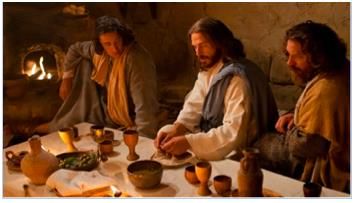
The Feast of the Unleavened Bread begins with the Passover meal on the evening of 15 Nisan (on the Jewish calendar) and lasts seven days. Together, these feasts commemorate Israel’s liberation from slavery in Egypt. The word Passover refers to the angel of death “passing over” Hebrew homes when killing the firstborn of the Egyptians, for the Jews had put lamb’s blood on their doorposts. Unleavened bread is a reminder of the haste with which the Hebrews left Egypt. As the true remnant, we know that Passover was fulfilled in Christ, whose blood was shed to free humanity from bondage to sin and death.
Matthew 26:26-28 “Now as they were eating, Jesus took bread, and after blessing it, broke it and gave it to the disciples, and said, “Take, eat; this is my body.” And he took a cup, and when he had given thanks he gave it to them, saying, “Drink of it, all of you, for this is my blood of the covenant, which is poured out for many for the forgiveness of sins.”
By saying these words, Jesus claimed something about himself that shifted how his followers saw Passover: He was the Passover lamb. This theme continues in the later books of the New Testament, particularly the epistles.
- 1 Corinthians 5:7-8 “Clean out the old leaven so that you may be a new batch, just as you are, still unleavened. For Christ, our Passover Lamb has been sacrificed. 8 Therefore, let us celebrate the feast, not with old leaven, nor with the leaven of vice and malice and wickedness, but with the unleavened bread of sincerity and [untainted] truth.”
-
- Paul is using the Passover celebration as an analogy. Leading up to the Passover meal was the Feast of Unleavened Bread (Exodus 12:17-20), during which the Israelites were to remove all leaven from their homes to symbolize the removal of sin from their lives. Leaven (yeast) was often used as a symbol of spiritual corruption.
- 1 Peter 1:18-19 “For you know that you were not redeemed from your useless [spiritually unproductive] way of life inherited [by tradition] from your forefathers with perishable things like silver and gold, 19 but [you were purchased] with precious blood, like that of a [sacrificial] lamb unblemished and spotless, the priceless blood of Christ.”
- Revelation 12:11 “They triumphed over him by the blood of the Lamb and by the word of their testimony; they did not love their lives so much as to shrink from death.”
- Testimony (G 3141): what one testifies, testimony: universally, in a legal sense, testimony before a judge.
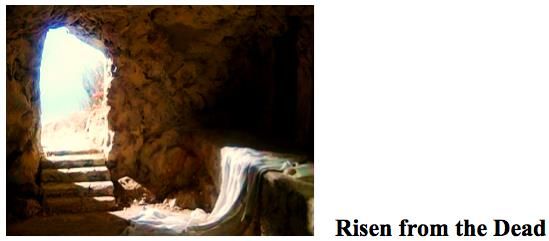
Jesus was born of a virgin. He came and fulfilled over 300 prophecies during his life and ministry on Earth. Then went to die on the Cross for our Sins. He then arose out of the tomb, an empty tomb 3 days later. Easter is about the Death, Burial, and Resurrection of Jesus Christ!
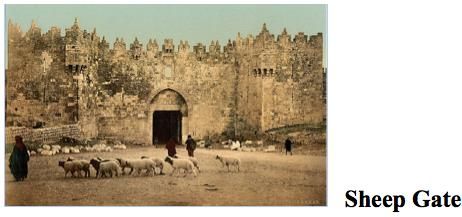
Nehemiah 3:1 “Then Eliashib the high priest arose with his brethren the priests and built the Sheep Gate; they consecrated it and hung its doors.” [New Living Translation]
The Sheep Gate was the first gate to be restored, and it was rebuilt by the High Priest and his fellow priests. Note: This was the only gate that was consecrated (set apart as holy), as it was used for bringing in sacrifices for the temple. Thus, the Sheep Gate was the entrance for sheep entering into the Temple compound from the sheep markets (where lambs were sold for sacrifice in the Temple) and the sheep pool (later known as Pool of Bethesda) where sheep were washed for sacrificing. The Sheep Gate also led to Golgotha, the path Jesus took to the crucifixion.
Jesus’s Sacrifice:
- The Lamb of God who takes away the sins of the world. (John 1:29)
- Salvation through Jesus’ death on the cross had no bolts or bars – salvation is freely available to everyone who enters through it. His death opens the way [door] for us and restores free access to the Father
- Built by the High Priest — Jesus is our High Priest
The Sheep Gate is mentioned at the start and end of the chapter — everything starts and ends with Jesus’ sacrifice on the cross. It is all about Jesus and His finished work on the cross! Everything we do in scriptural celebrations [not a Demonic celebration of Halloween] should point to Jesus and everything should revolve around Jesus.
Jesus the Lamb Sacrificed
Overview
The following table details the seven sayings that are arranged according to their traditional order. However, all seven sayings cannot be found in any one account of Jesus’ crucifixion. The ordering is a harmonization of the texts from each of the four canonical gospels. Three of the sayings appear only in Luke and three only in John. One other saying appears both in Matthew and, Mark, and another (“It is finished”) is only directly quoted in John but alluded to in Matthew and Mark.
| Sayings of Jesus Christ on the cross | Matthew | Mark | Luke | John |
| Father, forgive them; for they know not what they do. | 23:34 | |||
| Verily I say unto thee, today shalt thou be with me in paradise. | 23:43 | |||
| Woman, behold thy son! and behold thy mother! | 19:26–27 | |||
| Eloi, Eloi, lama sabachthani? or Eli, Eli, lama sabachthani? | 27:46 | 15:34 | ||
| I thirst. | 19:28 | |||
| It is finished. | 19:30 | |||
| Father, into thy hands I commend my spirit. | 23:46 |
Traditionally, these seven sayings are categorized in the following:
- Forgiveness
- Salvation
- Relationship
- Abandonment
- Distress
- Triumph
- Reunion
Priest and author Timothy Radcliffe observes the number seven as being significant as it represents perfection in the Bible. He writes that as God created the world in seven days, “these seven words belong to God’s completion of that creation.”
All verses are in the Amplified Bible Translation unless noted.
The seven sayings:
- Father, forgive them; for they know not what they do
- Luke 23:34 “And Jesus was saying, “Father, forgive them; for they do not know what they are doing.” And they cast lots, dividing His clothes among themselves.”
This first saying of Jesus on the cross is traditionally called “The Word of Forgiveness.” It is theologically interpreted as Jesus’ prayer for forgiveness for the Roman soldiers who were crucifying him and all others who participated in His crucifixion.
- Today shalt thou be with me in paradise
- Luke 23:43 “Jesus said to him, “I assure you and most solemnly say to you, today you will be with Me in Paradise.”
This saying is traditionally called “The Word of Salvation.” According to Luke’s gospel, Jesus was crucified between two thieves (traditionally named Dismas and Gestas), one of whom supports Jesus’ innocence and asks him to remember him when he comes into his kingdom. Jesus replies, “Verily I say unto thee…” (ἀμήν λέγω σοί, amēn legō soi), followed by the only appearance of the word “Paradise” in the gospels (παραδείσω, paradeisō, originally from Persian pairidaeza “paradise garden“).
- Woman, behold, thy son! Behold, thy mother!
- John 19:26-27 “So Jesus, seeing His mother, and the disciple whom He loved (esteemed) standing near, said to His mother, “[Dear] woman, look, [here is] your son!” 27 Then He said to the disciple (John), “Look! [here is] your mother [protect and provide for her]!” From that hour the disciple took her into his own home.”
John 19:26 John, the Apostle and author of this Gospel was Jesus’ cousin.
This statement is traditionally called “The Word of Relationship” and in it, Jesus entrusts Mary, his mother, into the care of “the disciple whom Jesus loved.”
Jesus also addresses his mother as “woman” in John 2:4. Although this sounds dismissive in English, the Greek word is a term of respect or tenderness.
- My God, my God, why hast thou forsaken me?
- Mark 15:34 “And at the ninth hour Jesus cried out with a loud voice, “Eloi, Eloi, lama sabachthani?” which is translated, “My God, My God, why have You forsaken Me?”
- Matthew 27:46 “46 About the ninth hour Jesus cried out with a loud [agonized] voice, “Eli, Eli, lama sabachthani?” that is, “My God, My God, why have You forsaken Me?”
This is the only saying which appears in more than one gospel and is a quote from Psalm 22.
- Psalms 22:1 “My God, my God, why have You forsaken me? Why are You so far from helping me, and from the words of my groaning?”
In both accounts, the words spoken by Jesus have been transliterated from Aramaic into Greek, and there are slight differences between the two versions (Mark: Ἐλωΐ, Ἐλωΐ, λαμὰ σαβαχθανί; Matthew: Ἠλί, Ἠλί, λεμὰ σαβαχθανί). These differences are most probably due to dialect. Matthew’s version seems to have been more influenced by Hebrew, whereas Mark’s is perhaps more colloquial.
In the verses immediately following this saying, in both gospels, the onlookers who hear Jesus’ cry mistakenly believe him to be calling for help from Elijah.
This saying is taken by some as an abandonment of the Son by the Father. Another interpretation holds that at the moment when Jesus took upon himself the sins of humanity, the Father had to turn away from the Son because the Father is “of purer eyes than to see evil and cannot look at wrong.” Other theologians understand the cry as that of one who was truly human and who felt forsaken. Put to death by his foes, very largely deserted by his friends, he may have felt also deserted by God.
Others see these words in the context of Psalm 22 and suggest that Jesus recited these words, perhaps even the whole psalm, “that he might show himself to be the very Being to whom the words refer; so that the Jewish scribes and people might examine and see the cause why he would not descend from the cross; namely because this very psalm showed that it was appointed that he should suffer these things.”
Although the gospel writers transliterate Jesus’s words as lama sabachthani, the phrase as found in Psalm 22 is lama azavtani (למה עזבתני). Azavtani translates as “left, abandoned, forsaken”, but the word sabachthani is not found in any early Jewish texts. It may derive from zavah, meaning “to sacrifice, slaughter,” in which case the word may have been chosen to emphasize the connection between the crucifixion of Jesus and the Passover sacrifice.
- I thirst
- John 19:28 “After this, Jesus, knowing that all was now finished, said in fulfillment of the Scripture, “I am thirsty.”
This statement is traditionally called “The Word of Distress” and is compared and contrasted with the encounter of Jesus with the Samaritan woman at the well.
- John 4:7-10 “Then a woman from Samaria came to draw water. Jesus said to her, “Give Me a drink.” 8 For His disciples had gone off into the city to buy food— 9 The Samaritan woman asked Him, “How is it that You, being a Jew, ask me, a Samaritan woman, for a drink?” (Jews considered Samaritan women ceremonially unclean) 10 Jesus answered her, “If you knew God’s gift [of eternal life], and who it is who says, ‘Give Me a drink,’ you would have asked Him [instead], and He would have given you living water (eternal life).”
Only John records this saying, but all four gospels relate that Jesus was offered a drink of sour wine. In Mark and Matthew, a sponge was soaked in the wine and lifted up to Jesus on a reed; John says the same but states that the sponge was affixed to a hyssop branch. This may have been intended as symbolically significant, as hyssop branches are often mentioned in the Old Testament in the context of the use of sacrificial blood for ritual purification.
This statement, of Jesus, is interpreted by John as the fulfillment of the prophecy.
- Psalm 22:15 “My strength is dried up like a fragment of clay pottery, and my [dry] tongue clings to my jaws, and You have laid me in the dust of death.”
- Psalm 22:15 “my palate is drier than a potsherd, and my tongue is stuck to my jaw“. [Jerusalem Bible]
- Psalm 69:21 “They (self-righteous hypocrites) also gave me gall [poisonous and bitter] for my food, and for my thirst they gave me vinegar to drink.”
- It is finished
- John 19:30 30 “When Jesus had received the sour wine, He said, “It is finished!” And He bowed His head and [voluntarily] gave up His spirit.”
- This wording implies that Jesus voluntarily and sovereignly released His spirit from His body in submission to God’s plan.
This statement is traditionally called “The Word of Triumph” and is theologically interpreted as the announcement of the end of the earthly life of Jesus in anticipation of His Resurrection.
The utterance after and tasting the sour wine and immediately before death is mentioned, but not explicitly quoted, in Mark 15:37 and Matthew 27:50 (both of which state that Jesus “cried with a loud voice and gave up the ghost”).
- Anyone’s last words are important, but the last words of Jesus carry some unique significance. Just before he breathed his last breath, Jesus uttered the phrase “it is finished.”
- John 19:28-30 Jesus knew that his mission was now finished, and to fulfill Scripture he said, “I am thirsty.” A jar of sour wine was sitting there, so they soaked a sponge in it, put it on a hyssop branch, and held it up to his lips. When Jesus had tasted it, he said, “It is finished.” Then he bowed his head and gave up his spirit.
- That phrase is the translation of one word, “tetelestai,” (τετέλεσται) in the original Greek of the New Testament. And this rich and carefully chosen word is full of powerful meaning.
“Tetelestai” – The Sacrifice Is Accomplished. Every Jewish person observing the crucifixion would have instantly recognized this word as the equivalent of a Hebrew phrase that was used in the Old Testament sacrificial system. Each year, on the Jewish holiday called The Day of Atonement, the High Priest would enter the temple and make a special sacrifice for the sins of the people of Israel. As soon as the priest had killed the animal, he would emerge from the place of sacrifice and declare to the waiting crowd “it is finished” in Hebrew. In this sacrifice, all the sins of Israel were symbolically placed on the lamb that was killed and punished in their place. Yet the Bible teaches that this sacrificial system was never really complete or finished because the sacrifice of that lamb was imperfect and temporary. But when Jesus died on the cross, he became the perfect and final sacrifice for all sin. The Book of Hebrews describes how Jesus was the ultimate Lamb of God and by His sacrifice, the work of forgiveness was finally complete.
- Hebrews 9:12, 26 “He did not enter by means of the blood of goats and calves; but he entered the Most Holy Place once for all by his own blood, having obtained eternal redemption…But now he has appeared once for all at the end of the ages to do away with sin by the sacrifice of himself.”
By saying “it is finished,” Jesus was signaling to the Jewish world that there was no more need for sacrifices or temples because his work brought ultimate fulfillment to what their sacrificial system foreshadowed.
- “Tetelestai” – The Work Is Complete. In New Testament times, when an employee had completed a day’s work or finished a project, he would tell his boss tetelestai. This was to signal that whatever it was that he was assigned to do was now completed. Similarly, when an artist would complete a piece of art, he would have a moment of unveiling where he would declare tetelestai. This too was to signal that his masterpiece was complete. No more touch-ups or adjustments were necessary, the work was done. When Jesus came to this world, he told us what his job was: to provide salvation to a lost and broken world.
- Luke 19:10 For the Son of Man came to seek and save those who are lost.
In his last words, Jesus was communicating that the work he came for was accomplished. The task of earning the salvation of the world was completed in his work on the cross. No more additions or adjustments were necessary – salvation was completed.
- “Tetelestai” – The Debt Is Paid in Full. Maybe the most common use of tetelestai in Jesus’s day was in debt collecting. When a person finally paid off a loan, they were issued a receipt that was stamped with the word tetelestai, which meant that their debt was now paid in full. This was verification that they were no longer responsible for any of that debt, that everything they owed was completely and permanently paid for. The Bible says that our sin created a debt to God, and one that we could never pay back on our own. But when Jesus died, he was paying off our debt of sin once and for all. Again, the Book of Hebrews describes the finality of Jesus’s payment for our sin.
- Hebrews 10:12-13, “But our High Priest offered himself to God as a single sacrifice for sins, good for all time. Then he sat down in the place of honor at God’s right hand…And when sins have been forgiven, there is no need to offer any more sacrifices.”
It Is Finished. All of these nuances of tetelestai converge together to communicate a beautiful truth – that Jesus completed the work of salvation once and for all. That means it is not up to us to add, complete, or finalize anything when it comes to our salvation – Jesus did it all. So now, when we put our trust in the finished work of Jesus, we can rest in confidence of our salvation and pursue God with our whole hearts.
- Father, into thy hands I commend my spirit
- Luke 23:46 “And Jesus, crying out with a loud voice, said, “Father, into Your hands, I commit My spirit!” Having said this, He breathed His last.”
- Psalm 31:5 “Into Your hand I commit my spirit; You have redeemed me, O Lord, the God of truth and faithfulness.”
- Repeated by many Jews as a bedtime prayer.
- “The Word of Reunion”
- John 19:30 30 “When Jesus had received the sour wine, He said, “It is finished!” And He bowed His head and [voluntarily] gave up His spirit.”
RISEN
No longer a Lamb slaughtered – or a “dying man” on a cursed tree: The Lord of Lords and King of kings
Revelation 1:12-16 “Then I turned to see the voice that was speaking with me. And after turning I saw seven golden lampstands; 13 and in the midst of the lampstands I saw someone like the Son of Man, dressed in a robe reaching to His feet, and with a golden sash wrapped around His chest. 14 His head and His hair were white like white wool, [glistening white] like snow; and His [all-seeing] eyes were [flashing] like a flame of fire [piercing into my being]. 15 His feet were like burnished [white-hot] bronze, refined in a furnace, and His voice was [powerful] like the sound of many waters. 16 In His right hand He held seven stars, and from His mouth came a sharp two-edged sword [of judgment]; and His face [reflecting His majesty and the Shekinah glory [visible, Divine presence] was like the sun shining in [all] its power [at midday].”
Happy Celebration of the “Risen Lamb of God”
Blessings in Christ,
Joseph “Jim” Stockstill 
“National War Council” – Founder and Chairman
Jim5555@nationalwarcouncil.org
P.O. Box 931
Argyle, TX 76226
nwc@nationalwarcouncil.org
Jim5555@nationalwarcouncil.org
Donations to National War Council
“The two most important days in your life are the day you are born and the day you find out why.”
Mark Twain
I’m new to the site but having problems finding current sessions. Just listened o this weeks but unable to find the one from last week. I see the one on Easter but that is old. Am I looking in the wrong place?
If you are looking for additional member only posts, I do not have anymore posted as of yet. Otherwise Jim’s YouTube video teachings are all posted now (except for July) at this link: https://www.nationalwarcouncil.org/home/nwc-youtube/