

Editor’s Note: I forgot about this post, I apologize for my error.
Greg
By Jim Stockstill
February 24, 2022
Part 1 [Amplified, Darby, and New American Standard Bible – NSAB]
The Wicked in Darkness
The Glory promised to Zion and the Ecclesia
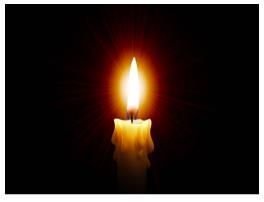
John 8:12 “Then Jesus again spoke to them, saying, “I am the Light of the world; the one who follows Me will not walk in the darkness, but will have the Light of life.”
Isaiah 42:3 “A bent reed He will not break off and a dimly burning wick He will not extinguish [smoking flax shall he not quench] He will faithfully bring forth justice [according to truth].”
Isiah 60:1-3 “Arise, shine; for your light has come, and the glory of the Lord has risen upon you. 2 For behold, darkness will cover the earth and deep darkness the peoples, But the Lord will arise upon you And His glory will appear upon you. 3 Nations will come to your light, And kings to the brightness of your rising.”
A bruised reed He will not break, and smoking flax He will not quench” (Matthew 12:20). As the NIV renders it, “A bruised reed he will not break, and a smoldering wick he will not snuff out.” Matthew here is quoting a prophecy from Isaiah 42 that pointed to the actions and demeanor of the coming Messiah, Jesus Christ. In the prophecy, the “bruised reed” and the “smoldering wick” refer to the spiritually, physically, or morally weak. A reed that is bruised may be damaged, but it is not irreparable. The “smoking flax” may be about to lose its fire altogether, but it can still be reignited.
The “smoking flax” is a reference to the wick of a lamp. The lamps of ancient times were made of clay and filled with olive oil; the wick for such a lamp was a few strands of flax fiber or twisted cotton thread. The flaxen wick was a quick burner and hard to keep lit. The Greek word translated “flax” in Matthew 12:20 is ‘linon,’ related to our English word linen. The English Standard Version (ESV) and other versions translate the word as “wick,” and the New Living Translation (NLT) translates it as “candle.”
Matthew points to the fulfillment of this passage. God had promised to bring comfort and deliverance/salvation to Israel, those (the Gentile Nations) who are in darkness, and the true remnant of the Lord Jesus Christ. Though God certainly had a plan for Israel regarding their captivity in Babylon (70 years spoken in Jeremiah 29), yet the redemption that Isaiah spoke of was primarily spiritual rather than physical. All of Israel was under the curse of sin, and Jesus came to redeem them from sin (Luke 5:31–32).
In Matthew 12, Jesus heals a man with a shriveled hand and later heals all who were ill among the multitude that followed Him. Those whom He healed were the “bruised reed” and the “smoking flax” of verse 20. The prophecy was that Jesus would not extinguish the struggling flame of those who needed Him. In His grace and mercy, He would not snuff out the dying embers of faith He encountered; rather, He was intent on fanning those flames to burn brightly for Him.
A smoking, smoldering wick is in a precarious position. It is weak; the embers are about to lose whatever heat and light they had and be darkened forever. There are many people in a similar state—they have been wounded emotionally, spiritually, or physically. They are weak and about to lose all hope. But then God steps in. The prophecy that Jesus fulfilled is that the smoking flax He would not quench. It is a prophecy that speaks of Christ’s compassionate care for the frail, demoralized, and exploited.
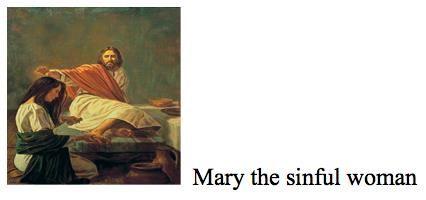
The sinful woman (G 268 pre-eminently sinful, especially wicked, and immoral) who anointed Jesus’ feet in Luke 7:36-39 (another account was in John 12:1-4, the sister of Lazarus at his home) was a “smoking flax,” and Jesus defended her presence and forgave her sin. The widow of Nain was a “smoking flax” as she walked in the funeral procession for her only son, but Jesus restored her son’s life and turned her grief into joy (Luke 7:11-14). The man with the demon-possessed boy was a “smoking flax” when he cried out, “I believe; help my unbelief!” (Mark 9:24), and Jesus gave him the faith he requested and released his son from bondage. The paralyzed man lying helplessly by the Pool of Bethesda was a “smoking flax” in John 5, and Jesus changed his life forever. Over and over in the gospels, we see Jesus caring for the “smoking flax” of the world.
Luke 7:38 There were two anointings of Jesus. This one is in the home of Simon the Pharisee (identified in Luke 7:40) in the area of Galilee by an unnamed woman. And behold, a woman who was in the city, a sinner; and when she knew that he was sitting at meat in the Pharisee’s house, she brought an alabaster cruse of ointment. [Because the definite article “the” is used before the word “city,” Meyer says it was Capernaum, and because Nain is the last city mentioned, Wisler says it was Nain, but it is not certain what city it was. Older commentators say it was Magdala because they hold the unwarranted medieval tradition that the sinner was Mary Magdalene or Mary of Magdala. The other was in the home of Simon the Leper in Bethany, by Mary the sister of Martha and Lazarus. The anointing in Bethany preceded the triumphal entry into Jerusalem (Matt 26:6-13; Mark 14:3-9; John 12:1-8).
Those who watch, like the Bereans, and check the scriptures and context are extremely valuable and especially appreciated. With cross referencing context and translations in Arabic, Hebrew, Chaldea (specifically ancient Babylonia in general), Greek, and Latin an oversight can easily be made. Thank you, my friends.
[Jesus needs sleep and was hungry]
Festival of Lights
Hanukkah today is often referred to as the Festival of Lights
The story of Hanukkah begins with King Antiochus IV, a Greek ruler who reigned over Syria from 175 B.C. until 164 B.C.
King Antiochus outlawed the traditionalist religion (the practice of Judaism) and the cultural practices associated with it, and every Jewish person was ordered only to worship Greek gods. His soldiers raided Jerusalem’s Holy Jewish Temple, setting up altars dedicated to Greek idols and gods like Zeus inside.
One group, called the Maccabees, was determined not to let King Antiochus strip them of their religion or way of life. In response to the ruler’s orders, they revolted. Led by the Jewish priest Mattathias, the army of Maccabean warriors fought against Antiochus’ army and were eventually victorious in forcing the king and his soldiers out of Jerusalem.
Once the Temple had been rebuilt, the Maccabees planned a grand ceremony rededicating the Temple to Judaism and God — the word “Hanukkah” comes from a Hebrew verb meaning “to dedicate.” After returning to the cleaned building, however, the Maccabees discovered that they only had enough oil to light the Temple’s menorah lamp for one day. They were unsure when they would be able to get more oil for the ceremony. Traditionally, the menorah required a ritually blessed type of olive oil that took a week to prepare. But miraculously, the oil they had on hand lasted for eight days and nights, which was the length of time it took the Maccabees to replenish their oil supplies. Today’s Hanukkah (The Festival of Lights) traditions honor many elements of the miracles that took place in this original story.
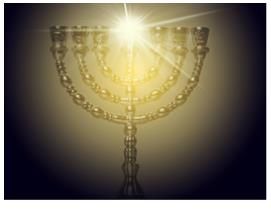
The Menorah
The seven lamps (The Temple Institute and the jewishvoice.org) allude to the branches of human knowledge, represented by the six lamps inclined inwards towards, and symbolically guided by, the light of God represented by the central lamp. The menorah also symbolizes the creation in seven days, with the center light representing the Sabbath.
Subsequently, question is, what is the difference between a seven-branch candle menorah and a nine-branch candle menorah? The seven (7) branch menorah is a representation of the seven-branched lamp which was in the Temple. The nine (9) branch menorah is properly called a hanukkiah, as it is designed specifically to be used at Hanukah, to light the eight candles for the eight days of the holiday. The ninth branch holds a candle, called the shamash (“helper” or “servant”), used to light the other eight.
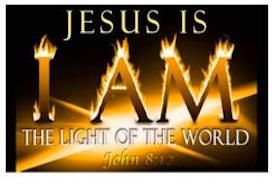
Jesus – the “Light of the World”
Exodus 25:31–39, “31 You shall make a lampstand of pure gold. Of beaten and turned work shall the lampstand be made, both its base and its shaft; its cups, its knobs, and its flowers shall be of one piece with it. 32 Six branches shall come out of the sides of it; three branches of the lampstand out of the one side and three branches out of its other side; 33 Three cups made like almond blossoms, each with a knob and a flower on one branch, and three cups made like almond blossoms on the other branch with a knob and a flower; so for the six branches coming out of the lampstand; 34 And on the center shaft itself you shall make four cups like almond blossoms with their knobs and their flowers. 35 Also make a knob on the shaft under each pair of the six branches going out from the lampstand and one piece with it; 36 Their knobs and their branches shall be of one piece with it; the whole of it one beaten work of pure gold. 37 And you shall make the lamps of the lampstand to include a [1] seventh one at the top of the shaft. The priests shall set up the seven lamps of it so they may give light in front of it. 38 Its snuffers and its ashtrays shall be of pure gold. 39 Use a talent of pure gold for it, including all these utensils.”
[1] Exodus 25:37 Certain Biblical critics in the past doubted the existence of the tabernacle and asserted that the concept of a sevenfold lamp was unknown until hundreds of years later, in Babylonian times (600 B.Sc.). The first objective evidence to the contrary became known in W. F. Albright’s excavation of Tell Beit Mirsim, south of Jerusalem, where he found seven-sprouted lamps from about 1200 B.Sc. The seventh season at Dothan yielded three sevenfold lamps from the period 1200-1400 B.Sc., showing again that this was not a late idea (Joseph P. Free, Near Eastern Archaeology).
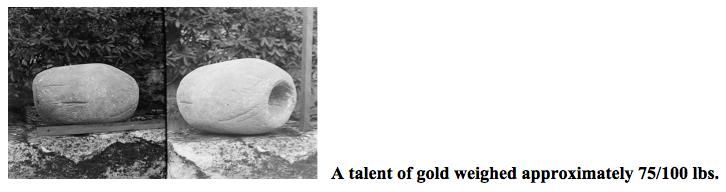
The Meaning of ‘Talent’
The Hebrew term for “talent” was kikkār, a flat, round gold or silver disk, or circular-shaped loaf. In the Greek language, the word comes from tálanton, a large monetary measurement equal to 6,000 drachmas or denarii, the Greek and Roman silver coins.
Weight
The talent was the heaviest or largest biblical unit of measurement for weight, equal to about 75 – 100 pounds or 35 kilograms. Imagine the opulence of king Rabbah’s crown when it was placed on King David’s head:
2 Samuel 12:26 “Now Joab fought against Rabbah of the sons of Ammon [Giants] and captured the royal city.”
2 Samuel 12:30 “David took the crown from their king’s head, and it was placed on his head. It weighed a talent of gold, and it was set with precious stones.”
Revelation 16:21 “And huge hailstones, weighing about a talent each [in the New Testament 100 lbs.], came down from heaven upon people; and people blasphemed God because of the plague of the hail because the hailstone plague *was extremely great.” We get a better picture of the crushing fierceness of God’s wrath when we realize these hailstones weighed about 75 pounds. Some modern Bible scholars equate the talent with 100 pounds rather than 75, calling the talent a hundredweight. In the English Standard Version, for example, Revelation 16:21 reads: “And great hailstones, about one hundred pounds each, fell from heaven on people.”
Exodus 38:24 “All the gold that was used for the work, in all the work of the sanctuary, [a] which was the gold of the wave offering, was twenty-nine talents [75 lbs.] and 730 shekels [0.5 oz.], according to the shekel of the sanctuary.”
Current Value of a Talent of Gold
A talent of gold today
Jesus told a parable of three servants that were given talents, presumably of gold. The weight of a talent is 34 kg. Using the current spot price of gold, which is $1908.79, you can see the value of talents today. The prices are updated every two minutes and given in U.S. dollars – rounded off. [2-23-2022]
- One Talent of Gold: $2,086,547 Million
- Two Talents of Gold: $4,0173,94 Million
- Five Talents of Gold: $10,432,734 Million
- Ten Talents of Gold today: $20,865,468 Million
- 1 Kings 10:10 (Queen of Sheba’s gift of gold to Solomon)
- One Hundred and Twenty Talents of Gold: $250,385,617 Million
- 1 Kings 10:14 (Solomon’s Annual Income)
- Six Hundred and Sixty-Six Talents (666) of Gold: $1,389,640,169 Billion
- 1 Chronicles 22:14 (David’s funding of Solomon’s Temple)
- One hundred thousand (100,000) talents of Gold today: $209,000,000,000 Billion
- One million talents (1,000,000) of silver today: $27,000,000,000 Billion
One Talent of Gold Today in US Dollars
To be continued…
February 28, 2022
Blessings,
Joseph “Jim” Stockstill 
“National War Council” – Founder and Chairman
Jim5555@nationalwarcouncil.org
P.O. Box 931
Argyle, TX 76226
nwc@nationalwarcouncil.org
Jim5555@nationalwarcouncil.org
Donations to National War Council
“The two most important days in your life are the day you are born and the day you find out why.”
Mark Twain
0 Comments