

By Jim Stockstill
Darkness – Deception and Distress
February 7, 2022
Doubting Thomas
Restoration and Refreshing
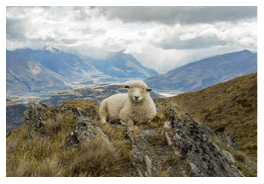
Jeremiah 50:6-7 “My people have become lost sheep; their shepherds have led them astray. They have made them turn aside [to the seductive places of idolatry] on the mountains. They have gone along [from one sin to another] from mountain to hill; they have forgotten their resting place. 7 “All who found them have devoured them; and their adversaries have said, ‘we are not guilty, because they have sinned against the Lord [and are no longer holy to Him], their habitation of righteousness and justice, Even the Lord, the confident hope of their fathers.’
The Lord God will separate the Goats from His true Followers
The Narrow and Wide Gates
Matthew 7: 13-27 13 “Enter through the narrow gate. For wide is the gate and broad and easy to travel is the path that leads the way to destruction and eternal loss, and there are many who enter through it. 14 But small is the gate and narrow and difficult to travel is the path that leads the way to [everlasting] life, and there are few who find it.
A Tree and Its Fruit
15 “Beware of the false prophets, [teachers] who come to you dressed as sheep [appearing gentle and innocent], but inwardly are ravenous wolves. 16 By their fruit you will recognize them [that is, by their contrived doctrine and self-focus]. Do people pick grapes from thornbushes or figs from thistles? 17 Even so, every healthy tree bears good fruit, but the unhealthy tree bears bad fruit. 18 A good tree cannot bear bad fruit, nor can a bad tree bear good fruit. 19 Every tree that does not bear good fruit is cut down and thrown into the fire. 20 Therefore, by their fruit you will recognize them [as false prophets]. 21 “Not everyone who says to Me, ‘Lord, Lord,’ will enter the kingdom of heaven, but only he who does the will of My Father who is in heaven. 22 Many will say to Me on that day [when I judge them], ‘Lord, Lord, have we not prophesied in Your name, and driven out demons in Your name, and done many miracles in Your name?’ 23 And then I will declare to them publicly, ‘I never knew you; depart from Me [you are banished from My presence], you who act wickedly [disregarding My commands].”
The Two Foundations
24 “So everyone who hears these words of Mine and acts on them, will be like a wise man [a far-sighted, practical, and sensible man] who built his house on the rock. 25 And the rain fell, and the floods and torrents came, and the winds blew and slammed against that house; yet it did not fall, because it had been founded on the rock. 26 And everyone who hears these words of Mine and does not do them, will be like a foolish (stupid) man who built his house on the sand. 27 And the rain fell, and the floods and torrents came, and the winds blew and slammed against that house, and it fell—and great and complete was its fall.”
The separation between the Sheep and Goats 2022, 2023
Ezekiel 20:33-38 “As I live, saith the Lord God, surely with a mighty hand, and with a stretched out arm, and with fury poured out, will I rule over you 34 and I will bring you out from the people, and will gather you out of the countries wherein ye are scattered, with a mighty hand, and with a stretched out arm, and with fury poured out. 35 And I will bring you into the wilderness of the people, and there will I plead with you face to face. 36 Like as I pleaded with your fathers in the wilderness of the land of Egypt, so will I plead with you, saith the Lord God. 37 And I will cause you to pass under the rod [as the shepherd does with his sheep when he counts them, and I will count you as Mine], and I will bring you into the bond of the covenant [to which you are permanently bound] 38 and I will purge out from among you the rebels, and them that transgress against me: I will bring them forth out of the country where they sojourn, and they shall not enter into the land of Israel: and ye shall know [without any doubt] that I am the Lord.
Pass H 5674: in the original – specifically to offer as a sacrifice or to consecrate
Rod H7626: in the following manner: tribe (140x), rod: rod, staff, shaft (of a spear, dart), club (of shepherd’s implement)
A shepherd’s implement, club, Psalm 23:4 Micah 7:14 (both figurative of י׳); used in mustering or counting sheep Ezekiel 20:37 (figurative), Leviticus 27:32 (compare Jeremiah 33:13)
- The Rod
- So, we see from the translation of Strong’s, the Hebrew word “rod” has a long history. The meanings include rod, scepter, and weapon. It does not refer to a “walking stick” as we often see depicted in drawings. The rod is the shepherd’s primary offensive weapon for protecting the flock from enemies, whether the threats are wild animals or human thieves. A shepherd’s rod is about two and a half feet long with a mace-like end that the shepherd embeds heavy pieces of iron. When used as a weapon it becomes intimidating and deadly.
- The rod and staff mentioned in Psalm 23, verse 4 represents God’s defense and His divine guidance. His rod is used to drive off our enemy, Satan, and demonic powers in the realm of darkness. God’s staff is used as guidance to the flock and to lift them back on the pathway when they fell.
- Many sheep in Shepard’s fold are stubborn and must be directed back to keep them from harm [poison weeds, foul water, precarious places, and vulnerable to predators – both animal and human]. An example from Moody’s Anecdotes, pp. 70-71.
- Self-Sufficiency
- “Dr. Andrew Bonar told me how, in the Highlands of Scotland, a sheep would often wander off into the rocks and get into places they couldn’t get out of. The grass on these mountains is extremely sweet, and the sheep-like it, and they will jump down ten or twelve feet, and then they cannot jump back again, and the shepherd hears them bleating in distress. They may be there for days until they have eaten all the grass. The shepherd will wait until they are so faint, they cannot stand, and then they will put a rope around him, and he will pull that sheep up out of the jaws of death. “Why don’t they go down there when the sheep first gets there?” I asked. “Ah!” He said, “they are so very foolish they would dash right over the precipice and be killed if they did!” And that is the way with men; they will not go back to God till they have no friends and have lost everything. If you are a wanderer, I tell you that the Good Shepherd will bring you back the moment you have given up trying to save yourself and are willing to let Him save you His own way.”
Two uses of the rod mentioned in the Bible
- To count sheep
- Leviticus 27:32 “And every tithe of herds and flocks, every tenth animal of all that pass under the herdsman’s staff, shall be holy to the Lord.”
- As the shepherd returns to the sheepfold in the evening, he holds his rod horizontally across the entrance just high enough for the sheep to pass under it one at a time. That way he can track the sheep. If a sheep is missing, the shepherd will immediately begin searching.
- In the sheepfold of God, He uses the shepherd’s rod as an alarm system to assure the safety of the flock. If any sheep is lost, Jesus the Good Shepherd will overturn heaven and earth until the lost lamb is found.
- Leviticus 27:32 “And every tithe of herds and flocks, every tenth animal of all that pass under the herdsman’s staff, shall be holy to the Lord.”
- To protect the sheep from wild animals and thieves

- From Daily Bread, August 13, 1990.
- Lorrie Anderson, missionary to the head shrinking Candoshi Shapra Indians of Peru, was looking for a quiet place for her daily time of Bible reading and prayer, so she went down to the edge of the river. After reading the Bible, she started her prayer list. Eyes closed, she did not see the deadly anaconda weaving through the water until it struck, burying its fangs into her flesh. It withdrew to strike, hitting her arm repeatedly as it held her, screaming, in its coils. It reared up for the death blows. Then suddenly the giant snake, never known to release its prey, relaxed its grip and slithered off through the water. While Lorrie was being treated, a witch doctor from a nearby village burst into the hut and stared at her. She could not believe Lorrie had survived. She said her son-in-law, also a witch doctor, had chanted to the spirit of the anaconda that morning and sent it to kill the young missionary. “I’m certain,” Lorrie said, “that except for the protection of God, it would have worked.”
The psalmist can meditate on the shepherd’s rod and say to himself, “I am safe from any threat and all harm. My confidence is my shepherd. He is skilled, armed with his rod and I know he is skilled in using it. The shepherd’s staff and his love for me are all I need for protection.”
https://revheadpin.org/2017/06/14/two-ways-god-uses-the-shepherds-rod/
I will come back to the Sheep and the Shepherd after the second vision.

John 20:24-28 “But Thomas, one of the twelve, called Didymus, was not with them when Jesus came. 25 The other disciples, therefore, said unto him, we have seen the Lord. But he said unto them, Except I shall see in his hands the print of the nails and put my finger into the print of the nails, and thrust my hand into his side, I will not believe. 26 And after eight days [new beginning] again his disciples were within, and Thomas with them: then came Jesus, the doors being shut, and stood in the midst, and said, Peace be unto you. 27 Then saith he to Thomas, reach hither thy finger and behold my hands; and reach hither thy hand, and thrust it into my side: and be not faithless, but believing. 28 And Thomas answered and said unto him, My Lord and my God.”
Thomas Didymus
Thomas is one who lived in Galilee. Another name they called him was Didymus. He was first mentioned in scriptures for his doubting when he was told about Jesus, hence the name “doubting Thomas.” A diligent study of the gospel shows that although he could be a pessimist, he was devoted to the gospel and full of faith. Tradition has it that Thomas traveled east as far as India to preach the gospel. He founded several churches in the country, and some still claim a history directly from him. He may have traveled almost as far as Chennai, known as Madras at the time.
Thomas was martyred in India by stoning and by a spear. His symbol has a spear to symbolize his death, and there is also a carpenter’s square pointing to the churches he founded.
Apostle Thomas Facts and Symbol
Thomas was also the spokesperson for the disciples. In the gospel of John, when Jesus went to Judea to raise Lazarus from the dead, Thomas said,
John 11:16 “Let us also go, that we may die with him.”
Thomas also sets Jesus up for the memorable eternal truth:
John 14:15-16 “I am the way, and the truth, and the life.”
Possibly a fisherman by trade, Thomas is one of the six apostles who went back to fishing after the death of Jesus. When the Lord visited the men at the sea of Galilee, he ate breakfast with Jesus and witnessed Peter’s restoration:
John 21:2-3 “Simon Peter, and Thomas who is called Didymus (the twin), and Nathanael from Cana of Galilee, as well as [John and James] the sons of Zebedee, and two others of His disciples were together. 3 Simon Peter said to them, “I am going fishing.” They said, “And we are coming with you.” So, they went out and got into the boat; and that night they caught nothing.”
Name of the author withheld – see the URL below if you want to read.
Lurking Inferiority and Doubt
“As an adult, I realized that it was also easy to think that God was against me when things seemed to go “wrong” in my life. This doubting God’s love has plagued me for most of my life. I have used different verses to fight that has helped me get victory in specific situations, but this inferiority complex was always lurking in the background. The sneaky thing is that Satan comes as an angel of light. (2 Corinthians 11:14) He makes it seem “humble” to think that I am not liked or not good enough, or that I am not invited to different things because I do not deserve any better.
A few years ago, over a short period of time, I experienced several major events where I experienced loss, both in the form of loved ones and in the loss of the use of my right arm which also brought constant physical pain. I had the control and stubbornness to show a positive face to the others but inside I was crushed. I realized, after some time, that I had stopped believing that God loved me or cared for me at all. How could anyone who loved me let these things happen? Did God even exist? What had I done that was so bad that I deserved this kind of treatment? I felt that I was slowly being pulled into a deadly whirlpool of darkness and despair and I did not know how to get out. I was even losing the will to live – it was too hard and too painful, and I felt so alone.
Verses were written specifically for me [each of us]
In the middle of this, a friend took the time to ask how I was really doing. He encouraged me and prayed for me, and he gave me the verses in Isaiah 43:1-5. He made me promise to read [this] every single day and to put my name in there. I promised. And this is what I read:
“But now, thus says the Lord, who created you, O (your name), and He who formed you, O (your name): ‘Fear not, for I have redeemed you; I have called you by your name; you are Mine (your name). When you pass through the waters, I will be with you; and through the rivers, they shall not overflow you. When you walk through the fire, you shall not be burned, nor shall the flames scorch you. For I am the Lord your God, the Holy One of Israel, your Savior; I gave Egypt for your ransom, Ethiopia, and Seba in your place. Since you were precious in My sight, you have been honored, and I have loved you; therefore, I will give men for you, and people for your life. Fear not, for I am with you; I will bring your descendants from the east and gather you from the west.’”
I did read these verses every single day. At first, as I read them, I was wondering who they were written for because they surely were not for me. But I obediently kept reading them. Slowly, by God’s grace, faith started to grow, and I realized that they were written specifically just for me. God loved me, He picked me; He [actually] actually really [loved me] did! Yes, there would be times when I would go through water and fire, but He would be there with me, strengthening me.
Freedom!
Then it hit me: this was my opportunity to get to the root of this giant of unbelief and inferiority that had plagued me my whole life, and really deal it a death blow. This whole situation was God’s mercy, so I could get free from the slavery, bondage, and unhappiness that came with living with doubt. I had been feeling like Job, that everything was against me, but then the verse about Job in James 5:11 came to me: “Indeed we count them blessed who endure. You have heard of the perseverance of Job and seen the end intended by the Lord – that the Lord is very compassionate and merciful.”
This came as a revelation to me: do I see the end intended by the Lord? Do I see that these situations that brought me to an end of myself and my own strength, were actually the answer to my prayers that I wanted to be freed from doubt and serve God with my whole heart? These situations that I would have done anything to get out of, became the thing that saved my life. This was the end intended by the Lord. All these things were sent from God because He loved me and wanted me to become happy and free.
But God would not make this happen magically; I had to face up to the truth and overcome these things that had bound me since my childhood. I had to fight against doubt and unbelief and fight to believe in Romans 8:28. “And we know that all things work together for good to those who love God, to those who are called according to His purpose.” God’s Word became my weapon and was the only thing that was effective against this giant of doubt. My own reasoning and thoughts were useless.
I have peace inside now because I am finally fully convinced that God loves me; that I am precious to Him and that He is controlling and arranging every small detail of my life for my very best. I have no fear for the future because I know that God has control of it and that He will be with me to go through whatever the future holds. I know I am not completely finished with my inferiority complex yet, but it has lost its power and control over me, so it is only a matter of time. I am so thankful for God’s Word and the power it has over darkness, and thankful for the care and prayers of men and women of God.”
https://activechristianity.org/believe-god-called-name
The Second Vision
He Knows us Intimately: (2022)
Matthew 10:30 “But even the very hairs of your head are all numbered [for the Father is sovereign and has complete knowledge].”
Luke 12:7 “Indeed the very hairs of your head are all numbered. Do not be afraid; you are far more valuable than many sparrows.”
Numbered Greek 706: ar-ith-meh’-o (3 X; (arithmetic); to enumerate or count, number.
[removed the Passion translation from the Bible Gateway]
http://www.mashupamericans.com/issues/8-things-always-wanted-know-black-womens-hair/

- Black hair is literally different than all other hair.
While other races can have straight, wavy, or curly strands, most Black people have varying degrees of tightly curled strands. (Check out this article’s chart for a more in-depth explanation.) It may come in spirals, coils, loops, zig-zags, or other curves. This is why it tends to grow up rather than down and can make gravity-defying shapes like afros and puffs.
- Black hair does grow.
It is a myth that Black hair does not grow. All human hair grows at about half an inch a month, depending on your health and genetics. Having long hair is more about how much hair you retain after breakage.
Black hair, because it is curly, can be weaker than straighter hair. Each bend in the strand represents a weak point in the hair shaft, which makes it more prone to breakage. All this means is that it takes a little more TLC to avoid breakage. So, we tend to have shorter hair, but that does not mean it does not grow.
- Perms, weaves, and extensions are all options for Black women, and sometimes simultaneously.
But what are all of these things? Great question!
Perm: When Non-Black women refer to a perm, they are often talking about adding a permanent curl to their hair through a chemical process. But Black hair is already curly. So, when we say “perm,” we are referring to permanently straightening our hair (also known as relaxing.)
Weave: For a weave, the woman’s real hair is braided into cornrows or other scalp braids. Then the extra hair is woven to those braids with a needle and string made especially for hair weaving.
Extensions: Extensions are like weaves, but they do not usually require the cornrows as a base. Depending on the type of extensions, the hair may be added through braiding or even specialty glue.
Natural: This generally refers to Black hair that has not had its texture altered by chemicals. Some take it a little further by not using any chemicals at all or anything that does not occur in nature.
- Natural hair is a big deal.
Daring to be.
For much of the Black American experience, we have been encouraged to look as European as possible. So, straightening our hair with chemicals or a hot comb was the only way a Black woman could look “presentable” for a long time. If you wanted to be beautiful or have a respectable job, your hair better looks as not Black as possible.
Natural hair experienced a resurgence during the Civil Rights Era and has continued to grow in popularity. Natural hair is not necessarily a symbol of the wearer’s Black pride, but it is definitely a symbol of accepting our hair as it grows from our heads. Every time I walk into a business meeting with my hair in an afro or a puff, I am doing something that many generations of Black women would not have dared to do.
- Hot combs are the enemy.
A hot comb is a medieval torture device used to punish Black women for not having straight hair that lives up to European standards of beauty hair tool is used to straighten hair.
It is a piece of metal with a heat-safe handle that is held over a fire or on a stove. Once it is hot enough to burn the skin off you, it is used to “press” the curls out of your hair by combing through it. And depending on how sure the hand of your hairdresser/mother/BFF is, it will also burn the back of your neck, the tips of your ears, and any other surface it might touch.
The hot comb has mostly fallen out of fashion but any Black woman over the age of 20 has memories of being burned by one.
- We do not wash our Black hair every day because Black hair (see #1).
The key to really nice shiny, healthy hair is a balance of the natural oils we all produce. With straight or wavy hair, oil travels down the shaft fairly easily. But if your hair is very curly or kinky, it is harder for oil to travel through those loop-the-loops. So, while non-Black people may wash their hair a lot to avoid excess oil, Black women worry more about maintaining what they have or adding more. If we washed our hair every day, it would be dry and unhealthy.
- We change our hairstyles a lot because we can. Winning!
Sweaty from Wimbledon. Still cute.
Culturally, Black women have the most options with their hair. It can be permed or natural. Bought or grown. Straightened or fluffy. Completely disappeared with a big pair of earrings to accessorize our bald heads. Do not be alarmed. It is just one of the many wonderful things about us.
One of the not-so-great things about this? Having to have that lame conversation on the first day back at the office after getting our hair done about how it has “magically grown.” Girl. Please see #3.
- Even if you ask nicely … we do not want you to touch our hair.
First, thank you for asking. Touching a Black woman’s hair without her permission is extremely rude. But even if you ask nicely, the answer is probably no.
I don’t know where your hands have been, and I also don’t want you messing up my ‘do. More importantly, most of us do not want strangers to touch our hair just so they can have the “experience.” It is akin to being pet like an animal. At best it is awkward, and at worst it is dehumanizing. So, it is fine to admire our hair from afar but please keep your hands to yourself, if you would like to keep them at all.
Members can find the charts shown on the PowerPoint at the URL.
He will draw us back
Back to the original Scripture: we know that God’s sheep strayed:
Jeremiah 50:6 My people hath been lost sheep: their shepherds have caused them to go astray, they have turned them away on the mountains: they have gone from mountain to hill, they have forgotten their resting place.
We know that Jesus came to be the Good, Great, and Chief Shepherd who would seek and save the lost sheep
Matthew 15:24 “[Jesus] answered and said, ‘I was not sent except to the lost sheep of the house of Israel.’”
The Sheep and the Shepherd:
Sheep are not as dumb as some suggest. The accusation “dumb as sheep” might have originated in the 1700s, when George Washington declared: “If freedom of speech is taken away, then dumb and silent we may be led—like sheep to the slaughter.”
Perhaps “dumb” is not a fair attribute of sheep, but “dependent” certainly is. Sheep are dependent on their shepherd for direction and protection. They are not independent creatures, they are not strong, nor are they survivors. They quickly wander away and can easily be led astray. Without their shepherd’s care, sheep are in great peril because they are not hunters that can find food, and they are small and defenseless, making them easy prey for predators. That is why the shepherd must keep close watch over his flock to protect and preserve the flock. So, when a sheep strays, the shepherd will prod them back into the sheepfold and put the wandering sheep back on the right path.
The same is true for God’s sheep. Jesus, as the Good Shepherd (John 10:11-14), will prod His wandering sheep back into His fold, to keep them in His protective care—and He will use a “rod” and a “staff” to direct them to ever abide with Him and to walk in the right direction on the right path.
Hebrews 13:20-21 Now the God of peace, that brought again from the dead our Lord Jesus, that great shepherd of the sheep, through the blood of the everlasting covenant, make you perfect in every good work to do his will, working in you that which is well-pleasing in his sight, through Jesus Christ; to whom be glory forever and ever. Amen.
Will Finish this Lesson with This:
Hosea 11:4 “I drew them with cords of a man, with bands of love, and I was to them as one who lifts up and eases the yoke over their cheeks, and I bent down to them and gently laid food before them.” [AMP – Classic Edition]
HIS LOVE IS EVERLASTING
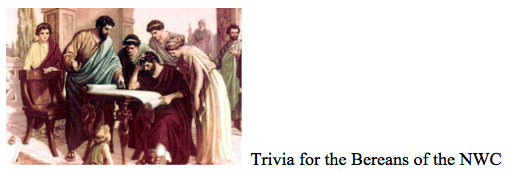
Who are the 12 Disciples of Jesus and what Job did they do?
According to the Bible, when Jesus was starting his ministry, he hand-picked 12 disciples to work with him. Let us learn their names, the families they come from, and what they did for a living before Jesus’ call.
Peter
Peter, son of Jonas and called Simon Peter or Cephas (meaning rock), was the leader and most outspoken disciple of Jesus. His influence among the disciples and in the early church was so great that his name is the most mentioned amongst the twelve disciples in the New Testament. Apostle Peter was one of the disciples who spent the most time with Jesus, more like an inner circle.
Peter has two books to his name (1st and 2nd Peter). He died as a martyr just like Jesus, but in his case, he requested they turn him upside down as a show of respect for Jesus. Peter was the only married disciple.
Peter’s source of livelihood before he answered the call to become a disciple was fishing. Jesus met him while he was fishing.
James the Greater
James, son of Zebedee and Salome, and brother to John was another member of the inner circle of Jesus. Because of this closeness, he experienced a special event such as the transfiguration on Mount Tabor and the miracle of raising Jairo’s daughter from the dead.
James was the first person to be martyred. King Herod beheaded him.
James was a fisher by profession, he was also an employer of labor in his time.
John
Like James, his elder brother, John was also a son of Zebedee and Salome and the third member of Jesus’ inner circle. John has four books (1st, 2nd, and 3rd John and revelation) in the Bible to his name.
He was the only disciple of Jesus to die a natural death, although there was once an attempt on his life. History has it that John was intolerant and had an uncontrollable temper.
Like James and Peter, John was also a fisher.
Bartholomew
Bartholomew, also known as Nathaniel, was born in Talmai. His father lived in Cana in Galilee. His father was at the time a king in Geshur. On his first encounter with Jesus, Jesus called him an outright Israelite.
Bartholomew died a martyr after being beaten, crucified, and beheaded. Before his unfortunate death, he was a diligent researcher of the scriptures. His occupation is unknown, but he might have been a fisher since he was with Andrew, James, and John when Jesus appeared to them after his resurrection.
Phillip
Phillip from Bethesda, the first disciple to receive the call from Jesus, was a great evangelist of the gospel. We see this in his forwardness to talk about Jesus to Nathaniel. As a symbol of respect to Jesus, he requested that his body be wrapped in papyrus instead of linen.
Like most of the fold, we believe Phillip to be a fisher. Scholars also say about Phillip that he was a man with a warm heart and a pessimistic personality. His death was by hanging.
Thomas Didymus [above]
Thomas is one who lived in Galilee. Another name they called him was Didymus. He was first mentioned in scriptures for his doubting when he was told about Jesus, hence the name “doubting Thomas.” A diligent study of the gospel shows that although he could be a pessimist, he was devoted to the gospel and full of faith.
Judas, son of James
Jude, also known as Judas or Thaddeus, is the elder brother to James, and a son of Alpheus. By the question, he once asked Jesus and from research, Jude believed in the ruling of the world by the chosen people.
Jude has quite a silent story in the bible, though he has a chapter in the New Testament of the Bible. Jude died by the arrows shot at him in Ararat.
There was no mention of the job description of Jude.
Simon the Zealot
Simon the zealot was a disciple of Jesus who originated in Canaan. The only information available about Simon is that he was a zealot. Zealots were a Jewish fanatic sect who had little belief in the struggles and suffering accompanied by the Christian faith.
With Simon’s background, we could say that his job description was politically inclined. He died a martyr.
Matthew
Matthew, also known as Levi as a son to Alpheus, was a controversial disciple of Jesus. His means of earning made him one of the controversial disciples of Jesus. Matthew, who lived in Capernaum died in Ethiopia in the hands of King Hyrcanus by a spear.
Matthew’s occupation before the call by Jesus was as a tax collector. Tax collectors were the most hated set of people in those days, as they were unfair. Yet Jesus found him worthy of the course of the gospel. He has an entire book in the New Testament to his name.
James the Less
James the Less is a son to Alpheus and a younger brother to Jude. Like his brother Jude, he also lived in Galilee. Scholars believe he is the writer of the book of James in the Bible.
They also say he was a man with a fiery and strong character. His body was sawed into bits after he died.
There was no clear description of the job he did to earn.
Judas Iscariot
Judas Iscariot, a son of Simon, lived in Kerioth of Judah. He is a popular name in the gospel of Jesus because he betrayed Jesus for thirty pieces of silver through a kiss. Although there is no trace of how Judas received the call, he gave three years to following Jesus.
Judas served as the treasurer during Jesus’ ministry on earth. The weight of his betrayal was heavy on his shoulder to the point he killed himself.
The death of Judas Iscariot brought about a vacancy, and there was a need for a replacement. And they chose Matthias after casting lots between him and Joseph or Barabbas. After the appointment with Matthias, there was little or no mention of him. Historians say he lived till 80 A.D.
Conclusion
The Bible provides no information on the professions of Philip, Bartholomew, Thomas, Thaddaeus, or James, the son of Alphaeus. It does provide information about Paul, who became an apostle after the death and resurrection of Jesus. He was a Pharisee and may have taught religion or worked in political office. During his missionary journeys, Paul supported himself as a tentmaker according to Acts 18:1-3.
Blessings,
Joseph “Jim” Stockstill 
“National War Council” – Founder and Chairman
Jim5555@nationalwarcouncil.org
P.O. Box 931
Argyle, TX 76226
nwc@nationalwarcouncil.org
Jim5555@nationalwarcouncil.org
Donations to National War Council
“The two most important days in your life are the day you are born and the day you find out why.”
Mark Twain
0 Comments