

By Jim Stockstill
March 10, 2022
Hope in Times of Darkness

Hebrews 6:17-20 “Accordingly God also, in His desire to show more convincingly and beyond doubt to those who were to inherit the promise the unchangeableness of His purpose and plan, intervened (mediated) with an oath. 18 This was so that, by two unchangeable things [His promise and His oath] in which it is impossible for God ever to prove false or deceive us, we who have fled [to Him] for refuge might have mighty indwelling strength and strong encouragement to grasp and hold fast the hope appointed for us and set before [us]. 19 [Now] we have this [hope] as a sure and steadfast anchor of the soul [it cannot slip and it cannot break down under whoever steps out upon it—a hope] that reaches farther and enters into [the very certainty of the Presence] within the veil, 20 Where Jesus has entered in for us [in advance], a Forerunner having become a High Priest forever after the order (with the rank/order) of Melchizedek.”

2 Corinthians 11:21-29 “But in whatever anyone else dares to boast—I am speaking foolishly—I also dare to boast. 22 Are they Hebrews? So am I. Are they Israelites? So am I. Are they descendants of Abraham? So am I. 23 Are they [self-proclaimed] servants of Christ?—I am speaking as if I were out of my mind—I am more so [for I exceed them]; with far more labors, with far more imprisonments, beaten times without number, and often in danger of death. 24 Five times I received from the Jews thirty-nine lashes [A – law allowed 40]. 25 Three times I was beaten with rods once I was stoned. Three times I was shipwrecked, a night and a day I have spent adrift on the sea; 26 many times on journeys, [exposed to] danger from rivers, danger from bandits, danger from my countrymen, danger from the Gentiles, danger in the city, danger in the wilderness, danger on the sea, danger among those posing as believers; 27 in labor and hardship, often unable to sleep, in hunger and thirst, often [driven to] fasting [for lack of food], in cold and exposure [without adequate clothing]. 28 Beside those external things, there is the daily [inescapable] pressure of my concern for all the churches. 29 Who is weak, and I do not feel [his] weakness? Who is made to sin, and I am not on fire [with sorrow and concern]?”
- Five times received 39 lashes [(Deuteronomy 25:1–3, 2 Corinthians 11:24, and Acts 22:19)
- Three times beat with a rod and stoned
- Three times shipwrecked (1 day and night adrift on the sea)
- Exposed to danger:
- From rivers
- Bandits
- My countrymen
- From the Gentiles (idol makers in Philippi)
- In the City
- In the wilderness
- Those posing as believers (the religious crowd – not the Pharisees)
- Unable to sleep, in hunger and thirst – driven to fasting for lack of food
- Cold and exposed without adequate clothing
- Labor and hardships
- In Philippi, during his second missionary journey, Paul and Silas were beaten and imprisoned according to Acts 16:16 – 18. In Rome, Paul spent two years in prison from AD 60-62. We know this from the references in the book of Acts that show that Paul was guarded by soldiers (Acts 28:16), allowed to see visitors (Acts 28:30), and given the chance to share the gospel (Acts 28:31).
The book of Acts also tells us that certain Jews from Asia tried to beat Paul to death, but the Roman army saved his life (Acts 21:30-32). To protect him, they took him to Caesarea to be heard by Governor Felix who imprisoned him there for more than two years.
The apostle was then taken to Rome and spent time in prison until his trial before Emperor Caesar. At the end of his fifth and last journey, in 67 A.D., he was again arrested and sent to Rome. There he stayed in jail until he was beheaded by the Romans around May or June of 68 A.D.
From the above references, we can conclude that the apostle Paul spent about a total of 5 1/2 to 6 years in jail.
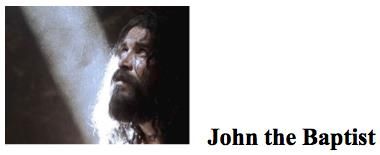
John 11:2-6 “Now while in prison, John heard about the works of Christ, and he sent word by his disciples, 3 and said to Him, “Are You the Coming One, or are we to look for someone else?” 4 Jesus answered and said to them, “Go and report to John what you hear and see: 5 Those who are blind receive sight and those who limp walk, those with leprosy are cleansed and those who are deaf hear, the dead are raised, and the poor have the gospel [good news] preached to them. 6 And blessed is any person who does not take offense at Me.”
John was in prison for nearly 2 years. Prisons were dark, damp, had poor air circulation, a lack of hygienic facilities, rats, and vermin, chained and shackles limited movement, and some were kept in wooden stocks. Food was mush and water was severely rationed.
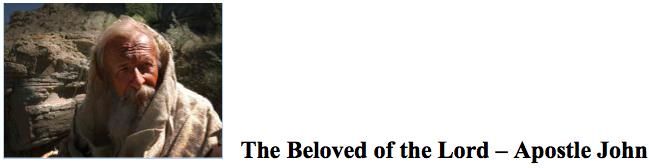
John informs us that he “was on the island that is called Patmos” (Revelation 1:9), a small, rocky Aegean Island just west of due south from Ephesus, employed as a prison or place of exile by the Roman emperors. Most prisoners were required to work the quarries and mines on the island. Somewhere between 81 A.D. and 96 ADS, the Apostle John was banished in Patmos by the emperor Domitian for preaching the Gospel at Ephesus. The Gospel declares that Jesus is Lord and God, but Domitian is required to be called Dominus et Deus “Lord and God.” Something had to give!! To shut him up, Domitian had John thrown into a cauldron of boiling oil before the Porta Latina at Rome, but John suffered no injury! The only way that Domitian could get rid of him was the same way he got rid of his wife – exile.
It was here on this island that Apostle John wrote Revelation (Apokalypsis). John, during his exile in Patmos, lodged into a grotto of which today’s name is “Apokalypsis.” At Emperor Domitian’s death in 97 ADS, John returned to Ephesus where he lived to a ripe old age.
Three Greek Words for Love
Eros
The word eros is not in the Bible. Not once. This erotic kind of love between a woman and her husband is fine and biblical. It is implied for example in Paul’s missive to husbands and wives in 1 Corinthians 7. Yet even when Paul alludes to marital bedroom activity, however, he never uses the word eros.
- Eros is the type of love that most closely resembles what Western cultures now view as romantic love. The word stems from the Greek word erotas, which translates to “intimate love.” Eros is sexual love, or at the very least, intimate physical love. In Santa Claus, one of the characters (Greek Mythology) was cupid and his “love” arrow.
- Definition of Eros 1: the Greek god of erotic love – CUPID, 2: the sum of life-preserving instincts that are manifested as impulses to gratify basic needs, as sublimated impulses, and as impulses to protect and preserve the body and mind – Death Instinct – survival.
Phileo [G 2309]
From G5384; to be a friend to (fond of an individual or an object)), i.e. have affection for (denoting personal attachment, as a matter of sentiment or feeling; while G25 is wider, embracing especially the judgment and the deliberate assent of the will as a matter of principle, duty and propriety: the two thus stand related very much as G2309 and G1014, or as G2372 and G3563 respectively; the former being chiefly of the heart and the latter of the head).
- While many Greeks viewed eros as dangerous, they viewed philia as the ideal love. Philia, in today’s terms, would resemble something like “brotherly love.” It was about showing loyalty, giving sacrifice, showing appreciation, and other more “noble” forms of love not involving sex.
- According to Aristotle, a person can feel philia towards someone for one of three reasons: their utility, their pleasantness, and their goodness. Aristotle also theorized that one must feel love for themselves before being able to feel love for others—something we have all heard from well-meaning friends when asking them for relationship advice.
- Plato’s theory was that the best kind of philia is the philia that blossoms out of eros, which is not all that different from the many people today who consider their spouse to be their best friend. [My beautiful bride – Kimberly.]
- There is also another type of love that sort of falls into Philia, depending on how you look at it, called storge. Storge is the inherent love, for example, the love between parents and their children.
Agape [G 25]: ag-ah’-pay; love, i.e., affection or benevolence; especially (plural) a love-feast.
Agape love is used in the Bible several times and it is an important version of the word. Agape means love but when it is used in the Bible it specifically means a love from God, defined by God. It is the very nature of God, “God is [agape] love” (1 John 4:8). Agape is a sacrificial love. It is the kind of love displayed by the Good Samaritan to the beaten and robbed man in the road. It is the kind of love we are called upon to love our enemies with, by the way (Matthew 5:44). It is God’s love, holy and good.
There is no right or wrong way to love, but there is beauty and fullness when you fill your life with multiple types of love. Sometimes it seems that the reason we may feel unfulfilled with our love life is that we are putting so much into our romantic relationships that we have neglected our friendships and sometimes even our family members. Similarly, it is important to remember not to become so enamored with romantic love that you stop feeling the beauty of more platonic love (philia) and the love of strangers (agape).
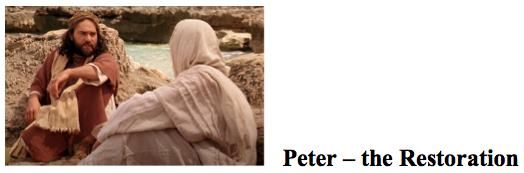
John 21:1-19 “After these things Jesus revealed [original text – made Himself visible] Himself again to the disciples at the Sea of Tiberias, and He revealed Himself in this way: 2 Simon Peter, Thomas who was called Didymus [the twin], Nathanael of Cana in Galilee, the sons of Zebedee, and two others of His disciples were together. 3 Simon Peter said to them, “I am going fishing.” They said to him, ‘We are also coming with you.’ They went out and got into the boat, and that night they caught nothing.”
The Supernatural belongs to the Lord
“4 But when the day was now breaking, Jesus stood on the beach; yet the disciples did not know that it was Jesus. 5 So Jesus said to them, ‘Children, you do not have any fish to eat, do you?’ They answered Him, ‘No.’ 6 And He said to them, ‘Cast the net on the right-hand side of the boat, and you will find the fish.’ So, they cast it, and then they were not able to haul it in because of the great quantity of fish. 7 Therefore that disciple whom Jesus loved said to Peter, ‘It is the Lord!’ So, when Simon Peter heard that it was the Lord, he put on his outer garment and threw himself into the sea. 8 But the other disciples came in the little boat, for they were not far from the land, but about two hundred cubits [a hundred yards] away, dragging the net full of fish. 9 So when they got out on the land, they saw a charcoal fire already made [laid] and fish placed on it, and bread. 10 Jesus said to them, ‘Bring some of the fish which you have now caught.’ 11 So Simon Peter went up and hauled the net to land, full of large fish, 153; and although there were so many, the net was not torn.”
Jesus Provides for their Needs
“12 Jesus said to them, “Come and have breakfast.” None of the disciples ventured to inquire of Him, “Who are You?” knowing that it was the Lord. 13 Jesus came and took the bread and gave it to them, and the fish likewise. 14 This was now the third time that Jesus revealed Himself to the disciples after He was raised from the dead.”
Are you a True Friend?
“15 Now when they had finished breakfast, Jesus said to Simon Peter, “Simon, son of John, do you love [Agapao] Me more than these?” He said to Him, “Yes, Lord; You know that I love [Phileo] You.” He said to him, “Tend My lambs.” 16 He said to him again, a second time, “Simon, son of John, do you love [Agapao] Me?” He said to Him, “Yes, Lord; You know that I love [Phileo] You.” He said to him, “Shepherd My sheep.” 17 He said to him the third time, “Simon, son of John, do you love [Phileo] Me?” Peter was hurt [Distressed] because He said to him the third time, “Do you love [Phileo] Me?” And he said to Him, “Lord, you know all things; You know that I love [Phileo] You.” Jesus said to him, “Tend My sheep.”
Recommission
“18 Truly, truly I tell you, when you were younger, you used to put on your belt and walk wherever you wanted; but when you grow old, you will stretch out your hands and someone else will put your belt on you, and bring you where you do not want to go.” 19 Now He said this, indicating by what kind of death he would glorify God. And when He had said this, He said to him, “Follow Me!”
Recommissioned!!!
Hope
1 Corinthians 13:13 “But now faith, hope, and love remain, these three; but the greatest of these is love.”
Hope [G 1680] in a good sense: expectation of good, hope; and in the Christian sense, joyful and confident expectation of eternal salvation: Acts 23:6; Acts 26:7; Romans 5:4; Romans 12:12; Romans 15:13; 1 Corinthians 13:13; 1 Peter 1:3, and 1 Peter 3:15.
Today – Hope
What is hope? Is it a wishy-washy maybe or a kind of unsure optimism? The modern idea of hope is “to wish for, to expect, but without certainty of the fulfillment; to desire very much, but with no real assurance of getting your desire.”
In Scripture, according to the Hebrew and Greek words translated by the word “hope” and according to the biblical usage, hope is an indication of certainty. “Hope” in Scripture means “a strong and confident expectation.” Though watered-down in modern terms, hope is to trust and have a confident expectation of what the Lord has spoken through Scripture.
Hebrews 11:1-2 “Now faith is the certainty of things hoped [expected] for, a proof [evidence] of things not seen. 2 For by it the people of old gained approval [good testimony].”
Romans 8:24-25 “For in hope we have been saved, but hope that is seen is not hope; for why does one also hope for what he sees? 25 But if we hope for what we do not see, with perseverance we wait eagerly for it.”
In summary, hope is the confident expectation, the sure certainty that what God has promised in the Word is true, has occurred, and or will follow God’s sure Word.
False Hope:
There are several warnings in Scripture against putting our hope in anything other than the Lord because these things will leave us ashamed, frustrated, disappointed, and in ruin. We are warned, and if history teaches us anything, we cannot place our hope in man/women, prophets, dreamers, signs/wonders – in Jesus Christ alone.
- Job 8:11-15 11 “Can the papyrus grow up without a marsh? Can the rushes grow without water? 12 While it is still green and not cut down, yet it withers before any other plant. 13 So are the paths of all who forget God, and the hope of the godless will perish, 14 whose confidence is fragile, and whose trust a spider’s web. 15 He trusts in his house, but it does not stand; He holds fast to it, but it does not endure.”
- Psalm 33:17 “A horse is a false hope for victory; nor does it deliver anyone by its great strength.”
- Psalm 146:5 “How blessed is he whose help is the God of Jacob, whose hope is in the LORD his God.”
- Proverbs 10:28 “The hope of the righteous is gladness, But the expectation of the wicked perishes.”
- Proverbs 11:7 “When a wicked man dies, his expectation will perish, And the hope of strong men perishes. The strong man hopes in his physical strength, his money, or power or position, but ultimately, it must perish.”
- Proverbs 24:14 “Know that wisdom is thus for your soul; if you find it then there will be a future, and your hope will not be cut off.”
Without God’s wisdom which gives hope, your hope will be in the wrong thing, and it will be cut off.
True Hope:
Our Father, Jehovah, is the “God of Hope” – the source of all genuine hope. If we are going to have hope (confident expectation), it must come from Him for He alone has the power to give it.
- Psalm 62:5 “My soul, wait in silence for God only, for my hope is from Him.”
- Romans 15:13 “Now may the God of hope fill you with all joy and peace in believing, that you may abound in hope by the power of the Holy Spirit.”
- Ephesians 2:12 “…remember that you were at that time separate from Christ, excluded from the commonwealth of Israel, and strangers to the covenants of promise, having no hope and without God in the world.”
- 1 Timothy 1:1-2 “Paul, an apostle of Christ Jesus according to the commandment of God our Savior, and of Christ Jesus, who is our hope; 2 To Timothy, my true child in the faith: Grace, mercy, and peace from God the Father and Christ Jesus our Lord.”
Hope is certain with knowing the Word of God and seeking Him as our source:
- Romans 15:4 “For whatever was written in earlier times was written for our instruction, that through perseverance and the encouragement of the Scriptures we might have hope.”
- Colossians 1:5-6 “Because of the hope laid up for you in heaven, of which you previously heard in the word of truth, the gospel, 6 which has come to you, just as in all the world also it is constantly bearing fruit and increasing, even as it has been doing in you also since the day you heard of it and understood the grace of God in truth.”
Knowing and Resting in God’s Grace.
- 2 Thessalonians 2:16 “Now may our Lord Jesus Christ Himself and God our Father, who has loved us and given us eternal comfort and good hope by grace.”
The Spirit-Filled Life
- Romans 15:13 “Now may the God of hope fill you with all joy and peace in believing, that you may abound in hope by the power of the Holy Spirit.”
- 1 Peter 1:13 “Therefore, gird your minds for action, keep sober in spirit, fix your hope completely on the grace to be brought to you at the revelation of Jesus Christ.”
Refreshing from the Streams in the Wilderness [January 3rd, 6th, and 10th)
Matthew 11:28-29 “Come unto me, all ye that labor and are heavily laden, and I will give you rest. 29 Take my yoke upon you and learn of Me; for I am meek and lowly in heart: and ye shall find rest unto your souls.”
- Labor (G 4192): Usage: (a) labor, toil, (b) pain, anguish, distress, suffering.
- Laden (G 5412) to place a burden upon
- Give/Rest (G 373): 4 X’s: Active: to refresh, the soul of anyone. (a) to cause or permit one to cease from any movement or labor to recover and collect his strength, (b) to give rest, refresh, to give oneself rest, take rest, and (c) to keep quiet, of calm and patient expectation
- Yoke (G 2218): 5 X’s Metaphorically, used of any burden or bondage: as that of slavery, of troublesome laws imposed on one, especially of the Mosaic law, Acts 15:10; Galatians 5:1; hence, the name is so transferred to the commands of Christ as to contrast them with the commands of the Pharisees which were a veritable ‘yoke’; yet even Christ’s commands must be submitted to, though easier to be kept.
- Learn (G 3129): a. universally, to increase one’s knowledge, 1 Timothy 2:11; 2 Timothy 3:7; to be increased in knowledge, 1 Corinthians 14:31; Romans 16:17; 1 Corinthians 14:35; Philippians 4:9; 2 Timothy 3:14; Revelation 14:3; in John 7:15 to be imbued with the knowledge of Christ, Ephesians 4:20; followed by the genitive of the thing furnishing the instruction, ἀπό with the genitive (of the source of teaching – Jesus in this case) of the person teaching. Matthew 11:29
- Meek (G 4235): 1 X – gentle, mild, and humble
- Lowly (G 5011): lowly in spirit (small s – human spirit), humble
- Heart (G 2588): [Heart/kardía] is mentioned over 800 times in Scripture but never refers to the literal physical pump that drives the blood. That is, “heart” is only used figuratively (both in the OT and NT.]
- The soul or mind, as it is the fountain and seat of the thoughts, passions, desires, appetites, affections, purposes, endeavors.
- Proverbs 3:34 “Though He scoffs at the scoffers and scorns the scorners, yet He gives His grace [His undeserved favor] to the humble [those who give up self-importance].”
Isaiah 40:31 “But those who wait for the Lord [who expect, look for, and hope in Him] shall change and renew their strength and power; they shall lift their wings and mount up [close to God] as eagles [mount up to the sun]; they shall run and not be weary, they shall walk and not faint or become tired.”
Isaiah 60:1-3 “Arise [from the depression and prostration in which circumstances have kept you—rise to a new life]! Shine (be radiant with the glory of the Lord), for your light, has come, and the glory of the Lord has risen upon you! 2 For behold, darkness shall cover the earth, and dense darkness [all] peoples, but the Lord shall arise upon you [child of God], and His glory shall be seen on you. 3 And nations [people in darkness] shall come to your light, and kings [leaders] to the brightness of your rising.” [Anointing of Jesus Christ]
Blessings in Christ,
Joseph “Jim” Stockstill 
“National War Council” – Founder and Chairman
Jim5555@nationalwarcouncil.org
P.O. Box 931
Argyle, TX 76226
nwc@nationalwarcouncil.org
Jim5555@nationalwarcouncil.org
Donations to National War Council
“The two most important days in your life are the day you are born and the day you find out why.”
Mark Twain
0 Comments