

By Jim Stockstill
Part 1: Baptism into your new beginning in Jesus Christ
A New Beginning in Christ
Part 2
April 21, 2022
The Vision:

During our private time on April 7, 10, and 11th (2022). The Lord said, “I want to show you something.” With that, we were in a heavily wooded area that reminded me of the woods that had become so familiar to me as a child growing up in Louisiana. Always knowing my thoughts, He knew the scene brought back memories of spending time alone in the woods listening to birds and watching for animals. We just stood there listening in silence and enjoying His creation. After a while, He spoke again, “what do you think of the old tree?” With storms, especially following a hurricane, it was not unusual for trees to have been struck, uprooted, or fallen. By its size, this particular tree (live oak) was majestic – very old and regal. I did not have to answer verbally (after years, most of our time in non-verbal), I was thinking ‘it is a beautiful tree, and it is sad to see it on the ground, and wondered if birds, squirrels, or other animals had nested in the tree.’ Lastly, He said, “you are sad about the tree, do you think it will ever live again?”
Back in our private time, He continued, “I AM saddened when My Children have lost hope and believe they are like the tree.” For the next few minutes, He showed me scene after scene of trials, tribulations, hardships – some of our own doing and others just living in a fallen world. There was the pain of rejection and heartache from church leaders, fellow Christians, and others who were wolves in sheep’s clothing – no judgment, just various scenes. There was more, but the last He talked about with a Father’s heart, “Like the noble tree, many of My Children believe their time is past and that I have forgotten them. I AM the Everlasting God [El Olam, Genesis 21:33 – the flag of the everlasting tree flag flashed before me] and filled with Compassion [El Rachum, Deuteronomy 4:31 – the picture of the upside-down pineapple cake He had shown me] for the aged who have been tossed aside.”
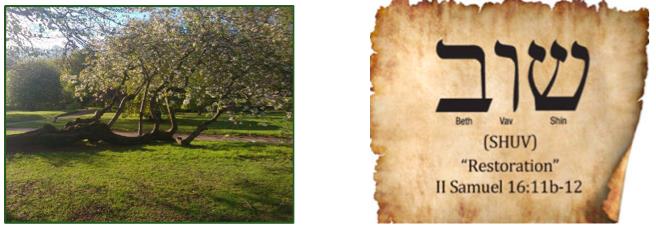
As He spoke the words of Everlasting and Compassion, He showed me three more scenes. We were back at a fallen tree but there had been a change. Rather than useless or dead, new life was springing from the tree. There were eight [new beginning] small trees growing with new life. He continued, “When My Children [men and women] believe their time has passed, I AM the new beginning and Restoration. [SHUV, 2 Samuel 16:11-12 – God of Restoration] The next scene was of the eight trees bursting with new blossoms. Besides their beauty, you could smell a pleasing fragrance as they enjoyed the sun. [Son] The last scene was brief – a pair of wedding rings with a radiance around them. Our private time was over, and I knew to study what had been shown and spoken.

- The wedding ring is a symbol and a public professing that a man and woman are married. It is a sign of a commitment to one another and represents the love, honor, and faithfulness that you have for your spouse. The commitment before God and to each other is a vow of love and fidelity through all stages of life. While traditions and cultures may be slightly different when it comes to celebrating a wedding day, the sentiment and meaning of love as the wedding rings are being exchanged remains the same throughout the world. It is a love that should last forever, symbolized by a ring that has no beginning nor end. Once you exchange vows and put the wedding ring on his/her finger, there is an understanding that you will be together from now until eternity. Some couples have a special message engraved on their wedding ring to further show the love they have for each other.
- The wedding ring has been worn on the left hand of individuals for hundreds of years, and more importantly, on the third finger from the thumb. The reason for positioning the ring on this finger comes from Roman times when there was a strong belief that a vein from this finger runs straight to the heart and moves at once with your heart. While scientists have proved this not to be the case, the story remains to this day as one of the main reasons for many choosing to wear their wedding ring on their left hand.
The Life Cycle:
- Stages in the natural
- Stages in the spirit/Spirit life of the Ekklesia
- Accepting Christ
- Baptism in water – “The Father, Son, and Holy Spirit”
- Baptism in the Holy Spirit
- Maturing in Jesus
- New Beginning – restoration and refreshing
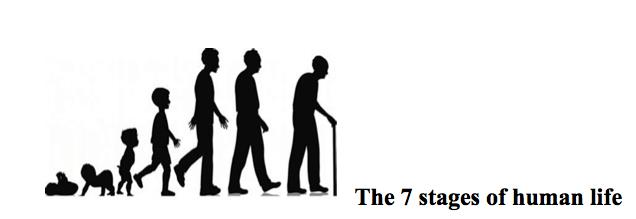
Pregnancy, infancy, the toddler years, childhood, puberty, older adolescence, adulthood, middle age, and the senior years.
The 5 stages of a human
- Social, physical, emotional, cognitive, and cultural changes take place throughout the lifespan of an individual.
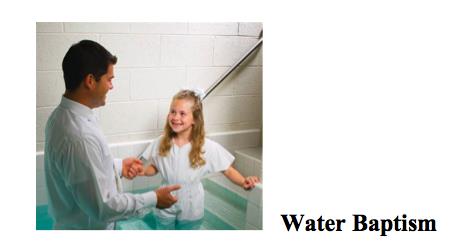
Baptism [Greek 908] (22 X):
- Of John’s baptism, that purification rite by which men on confessing their sins were bound to spiritual reformation, obtained the pardon of their past sins, and became qualified for the benefits of the Messiah’s kingdom soon to be set up.
- Of Christian baptism, a rite of immersion in water as commanded by Christ, by which one after confessing his sins and professing his faith in Christ, having been born again by the Holy Spirit unto a new life, identifies publicly with the fellowship of Christ and the church.
In his final instructions to his followers, Jesus is recorded as saying, “Go therefore and make disciples of all nations, baptizing them in the name of the Father and of the Son and the Holy Spirit.” [Matthew 28:19]
The Cleansing Flood
Genesis 6:5, 11–12 “Then the Lord saw that the wickedness of man was great in the earth and that every intent of the thoughts of his heart was only evil continually. The earth also was corrupt before God, and the earth was filled with violence. So, God looked upon the earth, and indeed it was corrupt; for all flesh had corrupted their way on the earth.”
1 Peter 3:18-22 “For indeed Christ died for sins once for all, the Just and Righteous for the unjust and unrighteous so that He might bring us to God, having been put to death in the flesh, but made alive in the Spirit; 19 in which He also went and preached to the spirits now in prison, 20 who once were disobedient, when the great patience of God was waiting in the days of Noah, during the building of the ark, in which a few, that is, eight persons [Noah’s family], were brought safely through the water. 21 Corresponding to that [rescue through the flood], baptism [which is an expression of a believer’s new life in Christ] now saves you, not by removing dirt from the body, but by an appeal to God for a good (clear) conscience, [demonstrating what you believe to be yours] through the resurrection of Jesus Christ, 22 who has gone into heaven and is at the right hand of God [place of honor and authority], with angels and authorities and powers made subservient to Him.”
- Baptism is a public representation of that which saves the believer—one’s faith in the death, burial, and resurrection of Jesus the Messiah.
The Miracle of New Birth
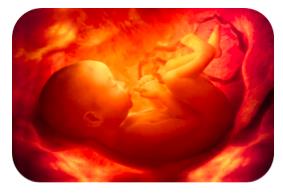
The placenta’s alarm clock signals when it is time for birth to begin.
- Time to push. The moment when the pregnancy ends and giving birth begins, it appears to be controlled by the set of membranes surrounding the fetus, which function as a clock. Drugs that slow down or speed up the clock could help ensure more babies are born close to the standard 40 weeks, giving more infants a fighting chance at life. (Source)
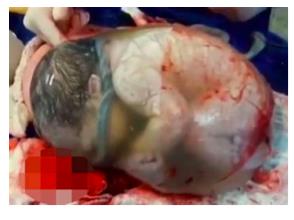
- A premature baby born at just 26 weeks in Los Angeles created medical history of sorts by giving a unique glimpse of life inside the womb. The baby born was born by C-section with the amniotic sac still intact. Now 10 weeks old (PowerPoint) he is a true medical rarity. (Source)
Part 2: The Fire of Holy Spirit and Restoration
April 21, 2022
Isaiah 63:11 “Then His people [seriously] remembered the days of old, of Moses and his people [and they said], where is He who brought [our fathers] up out of the [Red] Sea, with [Moses and the other] shepherds of His flock? Where is He who put His Holy Spirit within their midst” [AMP]
Yeshaya 63:11 “Then His people remembered the y’mei olam (days of old), of Moshe. Where is He that brought them up out of the yam (sea) with the ro’im of His tzon? Where is He that put His Ruach Hakodesh in the midst of them?” [Orthodox Jewish Bible]
Holy Spirit and Wisdom
Luke 7:35 “Yet wisdom is vindicated (shown to be true and divine) by all her children by their life (character, and deeds).”
Luke 7:35 “Yet chochmah (wisdom) is justified by all of her yeladim (children).” [Orthodox Jewish Bible]
- Chochmah – Wisdom [H 2451]: skillful, wisdom, wisely, wit. Yeladim [H 2454] chokmowth khok-moth’ or chakmowth; wisdom, every wise (woman).
- Yeladim – Children [H 3206]: boy, youth, child, offspring.
Studies on the Holy Spirit with Rabbi Moshe Yoseph Koniuchowsky
In Jewish thought and literature, as well as in the nuances of the Hebrew language itself, is revealed an understanding of the personage and character of the Ruach HaKadosh that has for the most part been lost through translation and introduction of pagan influences. Lost to everybody, that is, except Jewish scholars and others learned in the Torah and the Hebrew language of Scripture. The Ruach is simply the feminine manifestation of Jehovah – YHWH!
Hebrew, like many languages of the earth, contain both feminine and masculine tenses. The tense of the word determines the gender of the noun being described. For example, in Spanish “muchacho” means boy, and “muchacha” means girl. The “o” at the end of muchacho defines the masculine tense, and the “a” at the end of muchacha defines the feminine tense. In Hebrew, the word “Ruach” is a feminine tense, assigning to the Spirit a feminine nature, character, and gender. But when a tense (male or female) is in reference to a life form, then the tense is in reference to the “gender” of the life form.
Since we know the Ruach to be a conscious, living being, the manifested power of YHWH is capable of leading us, guiding us, and instructing and teaching us in the Way of all truth; Yochanan 14:26, Luke 12;12; we can determine from the tense of the Hebrew and Aramaic words that the Ruach HaKadosh is feminine tense, and therefore, “female in gender.”
- Luke 12:12 “For the Holy Spirit will teach you in that very hour and moment what you ought to say.”
- John 14:26 “But the Comforter (Praklit, Advocate, Counselor, Helper in Court), the Holy Spirit, Whom the Father will send in My name [in My place, to represent Me and act on My behalf], He will teach you all things. And He will cause you to recall everything I have told you.”
- He – in all English translations
This point is entirely lost in the Greek which has no feminine tense for spirit, but only a neuter tense, which is why “Spirit” is always presented as a “He” in the Greek (neuter words are given male attributes in translation), which error has been erroneously transferred over into English. In the Aramaic, the word for Spirit is Feminine as well as the word Ruacha axwr, confirming the Hebrew understanding of the word Ruach.
The original context and Hebrew definition of the Holy Spirit sheds light on the third Person of the Trinity who undoubtedly is the least understood member of the Godhead. The Trinity – Father, Son, and Holy Spirit – in the revelation of “I Am.”
- Genesis 17:1 “I am El-Shaddai—‘God Almighty.’”
- Genesis 26:24 “I am the God of your father, Abraham,” He said. “Do not be afraid, for I am with you and will bless you.”
- Exodus 3:14 “I Am Who I Am. Say this to the people of Israel: I Am has sent me to you.”
- Exodus 6:2 “And God said to Moses, “I am Yahweh—‘the Lord.’”
- Exodus 15:26 “I am the Lord who heals you.”
To be very clear, teaching the original translation is not an endorsement of the erroneous “Mother of Heaven” worship, such as what the Catholics [one religion] do with Mary, and Muslims do with Fatima. This lesson in no way shape or form endorses these false and improper applications of the truths in Scripture concerning the identity of the Ruach HaKadosh (Holy Spirit), any more than a true study on Kepha (Peter) would endorse Kepha (Peter) as the first Pope. It is typical for false religions [Drag Queen] to take truths of Scripture and corrupt and misapply them to one degree or another. If anything, the existence of a concept of “a mother in heaven” is only evidence of the fact that Satan (Satan/the Accuser) is a counterfeiter. And as such, attempts to produce counterfeit substitutes for every aspect of truth presented in Scripture lead people astray into false doctrines, such as the worship of “Mary” as the Mother of Heaven, which teaching and heresy are mentioned in 1 Timothy 4:1 “Now the Holy Spirit tells us clearly that in the last times some will turn away from the true faith; they will follow deceptive spirits and teachings that come from demons.” [New Living Translation]
- Genesis 1:26,27 “Then Elohim said, let Us make humans in our image according to our likeness, and Elohim created man in His own image, in the image of Elohim He created him, male and female He created them.”
- The word “human” here will say “man” in your translation, but it comes from the Hebrew word “Adam” which means humankind or “mankind” if you prefer the traditional term. So, if Elohim said “let us” – plural – make humankind/ humans/ mankind in “our” image, and He made them male and female, and the man was made in the image of the father, then in whose image was the female made in?
When you study Proverbs 8:1 through 9:5 the passages describe a being, named Wisdom, who is female in gender and motherly in nature; and who was present at the beginning of creation, and even before creation, before there ever was an earth. It describes her as being daily Yahuwah’s delight, rejoicing always before Him, and in His inhabited world; and states that her delight was in the sons of men.
Whoever finds wisdom finds life, whoever sins against Her wrongs his own soul, she instructs truth, righteousness, and justice; and that by Her, King’s reign. (Proverbs 8:35-36)
Holy Spirit in the Old Testament (Torah)
Moses: Old Testament Israel had mediators who stood between God and His people. To empower the OT mediators, the Holy Spirit gave them the special administrative ability to conduct the management of the nation and military skills which enabled them to defeat their enemies. The Lord first anointed Moses with this ministry of the Spirit and then, in a truly dramatic scene, took some of this ministry of the Spirit and shared it with the seventy elders. Thus, they were enabled to help Moses administer Israel. [Numbers 11:17–25]
Joshua, Judges, and Kings (Saul/David): Joshua (Deuteronomy 34:9), the judges (Judges 3:10; 6:34), and the kings of united Israel and the southern kingdom were anointed with this special ministry of the Spirit.
Samuel: When the Spirit of the Lord came upon King Saul, for example, he was in effect given “another heart” (1 Samuel 10:6–10). This does not mean that he was regenerated at this point in his life, but that he was given the skills to be a king. Later, the anointing was taken from Saul and given to David (1 Sam. 16:1–14). Saul, from that time on, became an incapable leader.
David: The Psalmist, King David, no doubt, had this special ministry of the Spirit in mind with his prayer of repentance in Psalm 51:10-12: 10 “Create in me a clean heart, O God, and renew a right spirit within me. 11 Cast me not away from Your presence; take not Your Holy Spirit from me. 12 Restore to me the joy of Your salvation and sustain me with a willing spirit.”
Solomon: King Solomon also perceived his youthful inabilities at the beginning of his reign and requested God to give him special wisdom in administering Israel. God was pleased with this request and granted an extra measure of wisdom to the young King (1 King 3:7–12, 28; 4:29–34).
Daniel 4:9 “O Belteshazzar, chief of the soothsayer priests, because I know that the Spirit of the Holy God is in you and no secret mystery is a burden or troubles you, tell me the visions of my dream that I have seen and the interpretation of it.”
The Glory has Departed (Ezekiel 8–11)
- It is five years (Ezekiel 8:1; 591 B.C.) before the siege of Jerusalem and the destruction of the temple. (586 B.C.)
- Ezekiel continues to prophesy these coming events.
- God has shown him the “idol of jealousy” that has provoked the wrath of God. He has seen the seventy elders of Israel offering incense to their idols. He has seen the women weeping for the fertility god Tammuz. He has even seen 25 men with their backs to the temple and their faces toward the east worshiping the sun.
- And now God’s wrath is coming upon them. Ezekiel has seen six executioners and a man clothed in linen with a writing case. The executioners destroy so thoroughly that Ezekiel asks, “Lord God! Are You destroying the whole remnant of Israel by pouring out Your wrath on Jerusalem?”
- The vision of chapter 10 describes cherubim and whirling wheels that accompany the departure of the glory of the Lord from the temple.
- God’s presence had been with the people of Israel since the Exodus from Egypt. The glory of the Lord was associated with the tabernacle and when Solomon constructed the temple the glory of the Lord dwelt in the most holy place with the Ark of the Covenant.
Ichabod
Ezekiel 11:22-24 “Then the cherubim lifted up their wings with the wheels beside them, and the glory of the God of Israel hovered over them. 23 The glory of the Lord went up from the midst of the city and stood over the mountain which is east of the city. 24 And the Spirit lifted me up and brought me in a vision by the Spirit of God to Babylonia, to the exiles. Then the vision that I had seen went up from me.”
With the departure of the Glory (Kavod) of God, the special divine appointment and “anointing” of theocratic rulers was no longer given (Ezekiel 8–11). The kings of the northern tribes, on the other hand, being essentially apostate and not in the Davidic line, never had the benefit of this special ministry of the Spirit.
Jesus
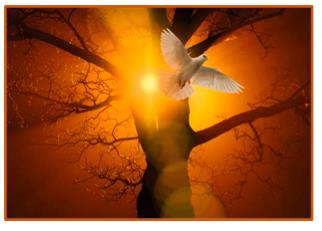
All four gospels report that, when Jesus was baptized by John the Baptist, the Holy Spirit descended upon Jesus in the visible form of a dove, (Matthew 3:16, Mark 1:10, Luke 3:22, John 1:32).
- Matthew 3:13-17 “Then Jesus arrived from Galilee at the Jordan, coming to John to be baptized by him. 14 But John tried to prevent Him, saying, “I have the need to be baptized by You, and yet You are coming to me?” 15 But Jesus, answering, said to him, “Allow it at this time; for in this way it is fitting for us to fulfill all righteousness.” Then he allowed Him. 16 After He was baptized, Jesus came up immediately from the water; and behold, the heavens were opened, and he saw the Spirit of God descending as a dove and settling/lighting [Abode – John 1:32] upon Him, 17 and behold, a voice from the heavens said, “This is My Son the beloved with whom I am well pleased.”
- Descending [G 2597]: of celestial beings coming down to earth
- Lighting [G 2064]: to come upon one in a good sense, of the Holy Spirit
- Abode [G 3306]: to put forth constant influence upon one of the Holy Spirit
This event is so familiar to most Christians that the dove has become a recognized symbol for the person or presence of the Holy Spirit. There is evidence in the gospels themselves that a dove could symbolize purity or innocence. Later in his gospel, Matthew reports Jesus instructing His disciples to “be shrewd as serpents and innocent as doves” (Matthew 10:16). Doves are also singled out as sacrificial animals in all four gospels (Matthew 21:12, Mark 11:15, Luke 2:24, John 2:14, 16), implying their representative status as a “clean” animal, pure and acceptable for sacrifice. And this may, indeed, be the point. Perhaps the Holy Spirit descended on Jesus in the form of a dove as a symbol of His sinless innocence and purity, testifying to His worthiness to be the once-for-all sacrifice and to bear the sins of humanity.
“Descend like a dove” and the royal throne
There is perhaps one more layer to this tradition that is worth briefly noting. As a symbol for Israel in general, the dove also became connected with traditions related to the royal line of David and the promise of the Messiah. One good example of this is the tradition of Solomon’s throne. There are several versions of this with slight variations between them, but the story goes that Solomon had an ornate royal throne, and on that throne, there was a dove grasping a hawk representing the promised time when God would deliver the nations to Israel (i.e., the messianic age). Some versions also have the dove place the crown on the king’s head and/or the scroll of the Law of Moses in his hand. Thus, the descending of a dove from heaven to rest upon Jesus may have conjured up cultural images of the Davidic kings crowned by a dove, the dove who clutched the hawk of the nations. In other words, it may have pointed to a divine recognition from heaven that this Jesus was the Messiah who would bring about the promises of God. This would pair well with a voice from heaven calling out “You are My beloved Son,” which would have inevitably called to mind the Messianic prophecy of Psalms.
- Psalm 2:7-10 “I will declare the decree of the Lord: He said to Me, you are My Son; this day [I declare] I have begotten You. 8 Ask of Me, and I will give You the nations as Your inheritance, and the uttermost parts of the earth as Your possession. 9 You shall break them with a rod of iron; You shall dash them in pieces like potters’ ware. 10 Now therefore, O you kings, act wisely; be instructed and warned, O you rulers of the earth.” [NASB]
Mark 1:12 “Immediately the [Holy] Spirit drove Him out into the wilderness.”
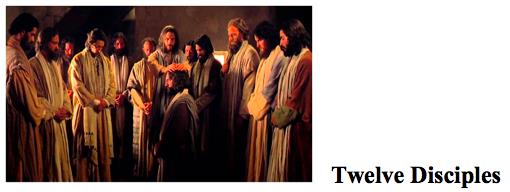
He [Jesus] Breathed on Them
John 20:19-28 “19 So when it was evening on that same day, the first day of the week, though the disciples were meeting behind barred doors for fear of the Jews, Jesus came and stood among them, and said, “Peace to you.” 20 After He said this, He showed them His hands and His side. When the disciples saw the Lord, they were filled with immense joy. 21 Then Jesus said to them again, “Peace to you; as the Father has sent Me, I also send you [as My representatives].” 22 And when He said this, He breathed on them and said to them, “Receive the Holy Spirit. 23 If you forgive the sins of anyone they are forgiven [because of their faith]; if you retain the sins of anyone, they are retained [and remain unforgiven because of their unbelief].” 24 But Thomas, one of the twelve [disciples], who was called Didymus (the twin), was not with them when Jesus came. 25 So the other disciples kept telling him, “We have seen the Lord!” But he said to them, “Unless I see in His hands the marks of the nails, and put my finger into the nail prints, and put my hand into His side, I will never believe.” 26 Eight days later His disciples were again inside the house, and Thomas was with them. Jesus came, though the doors had been barred, and stood among them and said, “Peace to you.” 27 Then He said to Thomas, “Reach here with your finger, and see My hands; and put out your hand and place it in My side. Do not be unbelieving, but [stop doubting and] believe.” 28 Thomas answered Him, “My Lord and my God!”
- Breathed [G 1720]: Only time in the NT – to blow or breathe upon.
The Greek word here used is employed nowhere else in the New Testament but is the very one used by the Septuagint translators of Genesis 2:7: ‘And the Lord God formed man of the dust of the ground and breathed into his nostrils the breath of life, and man became a living soul.’ There, man’s original creation was completed by this act of God; who then can fail to see that here in John 20, on the day of the Savior’s resurrection, the new creation had begun, begun by the Head of the new creation, the last Adam acting as a quickening spirit:
- 1 Corinthians 15:45 “So it is written [in Scripture], “The first man, Adam, became a living soul (an individual);” the last Adam (Christ) became a life-giving spirit [restoring the dead to life].”
- Jesus, after the manner of the Hebrew prophets, expresses by the symbolic act of breathing upon the apostles the communication of the Holy Spirit to them.
Water Baptism for a public act testifying of Jesus as Savior and the Remission of Sins
1 Corinthians 12:13 “For also in [the power of] one Spirit [we] have all been baptized into one body, whether Jews or Greeks, whether bondmen or free and have all been given to drink of one Spirit.” [Darby]
The baptism following repentance and forgiveness of sin is a public proclamation.
The Holy Spirit
Tongues of Fire Appear on Believers During Mozambique Worship Service
July 30, 2016
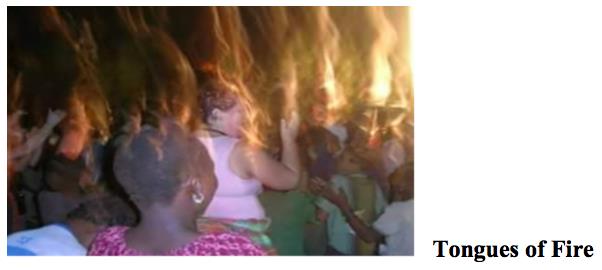
The photo was taken in 2005 by a team member who was part of a mission trip to Mozambique Africa. At the time the photo was taken, they were having an intense worship session and dancing with joy, as they were setting up to show the Jesus film.
The mission trip was led by James Goll, on July 11, 2016, James Goll posted the following comment on his Facebook page regarding this photo:
- “This picture was probably one of the major highlights in Michal Ann’s (his wife) travels and ministry that took her around the globe. This photo is not doctored up in any manner. This was in Pemba, Mozambique. I think when Michal Ann was ministering. Flames of fire, like in Acts 2, appeared. Come on Jesus, baptize us in the Holy Spirit and fire!”
Ephesians 1:13 “In Him you also who have heard the Word of Truth, the glad tidings (Gospel) of your salvation, and have believed in and adhered to and relied on Him, were stamped with the seal of the long-promised Holy Spirit.”
John
John 20:21-23 “21 [Jesus] said therefore again to them, Peace [be] to you: as the Father sent me forth, I also send you. 22 And having said this, he breathed into [them], and says to them, receive [the] Holy Spirit: 23 whose soever sins ye remit, they are remitted to them; whose soever [sins] ye retain, they are retained.”
Luke
Luke 24:49 “And, behold, I send the promise of my Father upon you: but tarry ye in the city of Jerusalem, until ye be endued with power from on high.” [KJV]
- Endued [G 1746] (2 X): en-doo’-o; from G1722 and G1416 (in the sense of sinking into a garment); to invest with clothing (literally or figuratively):—array, clothe (with), endue, have (put) on.
- Power [G 1411]: doo’-nam-is; from G1410; force (literally or figuratively); specially, miraculous power (usually by implication, a miracle itself):—ability, abundance, meaning, might, (worker of) miracles, power, strength, violence, mighty (wonderful) work.
- From [G 1537]: a primary preposition denoting origin (the point whence action or motion proceeds), from, out (of place, time, or cause; literal or figurative; direct or remote):—after, among, × are, at, betwixt(-yond), by (the means of), exceedingly, (+ abundantly above), from (among, forth, up), + grudgingly, + heartily, X heavenly, × hereby, + very highly, in, (because, by reason) of, off (from), on, out among (from, of), over, since, × thenceforth, through, × unto, × vehemently, with(-out).
- High [G 5311]: (6 X) from Aeschylus and Herodotus down, height: properly, of measure, Ephesians 3:18; Revelation 21:16; of place, heaven (A. V. on high), Ephesians 4:8; Luke 1:78; Luke 24:49; metaphorically, rank, high station: James 1:9 (Job 5:11; 1 Macc. 1:40 1 Macc. 10:24.
Water Baptism (immersion) to Baptized (endued, clothed) with the Spirit and Power.
The book of Acts begins with Jesus’ parting words to His apostles before His ascension to the right hand of God the Father. In His opening statement, Jesus promises the Holy Spirit, and He does this by distinguishing the coming of the Spirit from the baptism of John. Acts 1:5 “For John truly baptized with water, but you shall be baptized with the Holy Spirit not many days from now.” In Matthew 3:11 “John had testified the same of his baptism, “I indeed baptize you with water unto repentance, but He who is coming after me is mightier than I, whose sandals I am not worthy to carry. He will baptize you with the Holy Spirit and fire.” (Mark 1:8; Luke 3:16; John 1:33)
Peter and the other Apostles had already been born again. But only then were they baptized by the Holy Spirit. Remember that Jesus had said in the upper room:
- John 14:17 “The Spirit of Truth, whom the world cannot receive (welcome, take to its heart), because it does not see Him or know and recognize Him. But you know and recognize Him, for He lives with you [constantly] and will be in you.” [AMP]
The Holy Spirit began indwelling (clothing) the 120 believers gathered at Pentecost. That permanent indwelling is when believers are placed into (baptized into) the Body of Christ by the Spirit.
There is no question but that the Apostles received the Spirit at Pentecost. Nevertheless, they also receive the Holy Spirit on the very day (John 20:19) Jesus rose from the dead as we read in John 20:22 which occurred seven weeks earlier (50 days)?
How many days were there between Jesus’ ascension to Heaven and Pentecost?
The normal understanding of John 20:22 is that when Jesus breathed on the Eleven, He gave enablement through the Holy Spirit. They were not endued or clothed with the indwelling at that time, but they received the Spirit of God.
From Scripture we know by the Lord’s own words that the time they would receive the Spirit would be after He ascended to heaven:
- John 16:7-8 “But I tell you the truth: it is to your advantage that I am leaving; for if I do not leave, the Helper [Counselor, Helper, Advocate, Intercessor] will not come to you; but if I go, I will send Him to you. 8 And He, when He comes, will convict the world regarding sin, and righteousness, and judgment.”
Thoughts on receiving the Holy Spirit in salvation
Those we covered in the Old Testament were wrapped in the Holy Spirit with a special anointing to fulfill their purpose. In the New Testament, beginning with John the Baptist (spirit of Elijah), water baptism was for repentance and remission of sin.
- Malachi 4:5“Behold, I am going to send you Elijah the prophet before the coming of the great and terrible day of the Lord. 6 He will turn the hearts of the fathers back to their children and the hearts of the children to their fathers so that I will not come and strike the land with complete destruction.”
For example: with less than 24 hours to live on his hospital bed, the father gives his blessing to his son for his upcoming wedding (three weeks). The father gives his blessing, but the son knows it is for the upcoming wedding. The father gives his blessing because on the day of his wedding his father will be in heaven.
Conclusion for Part 2
Baptism is a sign of repentance and accepting Jesus Christ as your/my savior. According to the teachings in the New Testament, the disciples of Jesus Christ (Jew and Gentile) progressed from being baptized in the baptism of John the Baptist (the baptism of repentance), to being baptized in the name of the Father, Son, and Holy Spirit – the baptism into Jesus Christ.
We covered the only time in the New Testament where Jesus breathed on His disciples, and they received the Holy Spirit. Yet, even with that, He told them to tarry in Jerusalem until they were endued (clothed) with power by the Holy Spirit. We know that occurred on Pentecost.
From studies and my private time, the Holy Spirit was given to men and women to fulfill their purpose and destiny – we covered some of them in the Old Testament. The anointing of Holy Spirit was upon these men and women, but they were not endued or clothed within (Soul – mind, will and emotions) as Jesus promised.
One clarification in the Old Testament
Deuteronomy 34:9 “Now Joshua the son of Nun was filled with the spirit of wisdom, for Moses had laid his hands on him; and the sons of Israel listened to him and did as the Lord had commanded Moses.”
- Filled [H 4392:] figurative full of blessing Deuteronomy 33:23; wisdom Deuteronomy 34:9; justice Isaiah 1:21; commotion Isaiah 22:2; fury Isaiah 51:20; lies Nahum 3:1; wisdom Ezekiel 28:12; only twice in construct before that with which a thing is filled Isaiah 1:21
Acts 9:17 “So Ananias left and went into the house. And he laid his hands on Saul and said, Brother Saul, the Lord Jesus, who appeared to you along the way by which you came here, has sent me that you may recover your sight and be filled with the Holy Spirit.”
Acts 8:17-19 “Then they began laying their hands on them, and they were receiving the Holy Spirit. Now when Simon saw that the Spirit was bestowed through the laying on of the apostles’ hands, he offered them money, saying, “Give this authority to me as well, so that everyone on whom I lay my hands may receive the Holy Spirit.”
Acts 19:6 “And when Paul had laid his hands upon them, the Holy Spirit came on them, and they began speaking with tongues and prophesying.”
Being filled with the Holy Spirit can happen at once, separate, or unknown to the individual – my experience in the hospital.
Blessings in Christ,
Joseph “Jim” Stockstill 
“National War Council” – Founder and Chairman
Jim5555@nationalwarcouncil.org
P.O. Box 931
Argyle, TX 76226
nwc@nationalwarcouncil.org
Jim5555@nationalwarcouncil.org
Donations to National War Council
“The two most important days in your life are the day you are born and the day you find out why.”
Mark Twain
0 Comments